
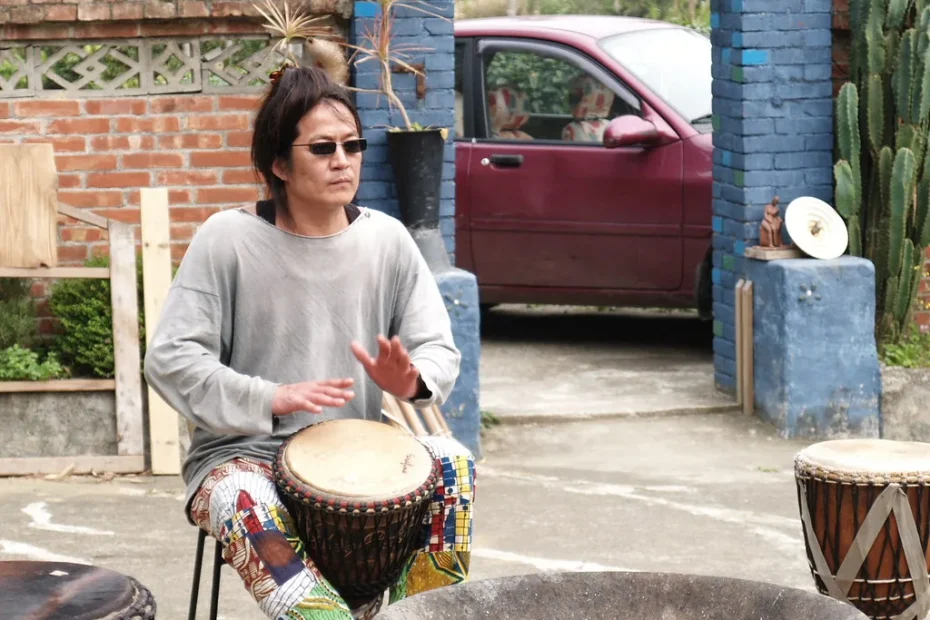
Mamady Keïta was a master of the djembe. He shared his knowledge with people around the world. The Kuku rhythm is very popular in Africa and is widely played.
The Kuku rhythm has an important place in Africa. Mamady Keïta was an ambassador for this culture. He played the djembe with passion and taught the secrets of this rhythm.
Mamady Keïta wrote his first book in 1999. Titled “A Life for The Djembe,” it covers traditional rhythms and more recent creations. It reflects his expertise in African percussion and the djembe.
Mamady Keïta’s legacy in the world of the djembe
Mamady Keïta, a master of the djembe, left his mark on African music. Born in Guinea, he began playing the djembe at a very young age. His talent soon made him famous.
He helped introduce the djembe to audiences around the world. His role as a guardian of traditions was vital.
In Guinea, Mamady Keïta grew up surrounded by djembe music. He learned from local masters and developed his own styles and techniques.
He shared his passion for music with others. These exchanges shaped his journey in Guinea.
His remarkable journey in Guinea
In Guinea, Mamady Keïta was influenced by several ethnic groups. The Malinké, Wassoulounké, Soninké, Khassonké and Bambara peoples all had an impact on him. He learned traditional rhythms such as Kuku and Djembe Mendiani.
These rhythms are played at ritual ceremonies and passed down from generation to generation.
His contribution to the worldwide spread of the djembe
Mamady Keïta shared his knowledge of the djembe with the world. He taught students from many countries and performed at international festivals and concerts.
His role as a guardian of traditions
As a guardian of traditions, Mamady Keïta emphasized the importance of knowing the history of rhythms. He stressed respect for tradition and peace through music. His legacy inspires future musicians and djembe enthusiasts.
The Kuku rhythm: origins and cultural meaning
The Kuku rhythm comes from West Africa. It is played at many ceremonies and celebrations. It has an important place in African culture, particularly because of its deep cultural meaning. The origins of the Kuku rhythm are linked to Manding tradition. This tradition is found in several West African countries, including Mali, Guinea, Senegal and Côte d’Ivoire.
The Kuku rhythm is played at village celebrations and accompanied by traditional dances. Each region and community has its own rhythms, which tell the story and express the culture of Africa. The Kuku rhythm is energetic and cheerful; it conveys the joy and togetherness of these ceremonies.
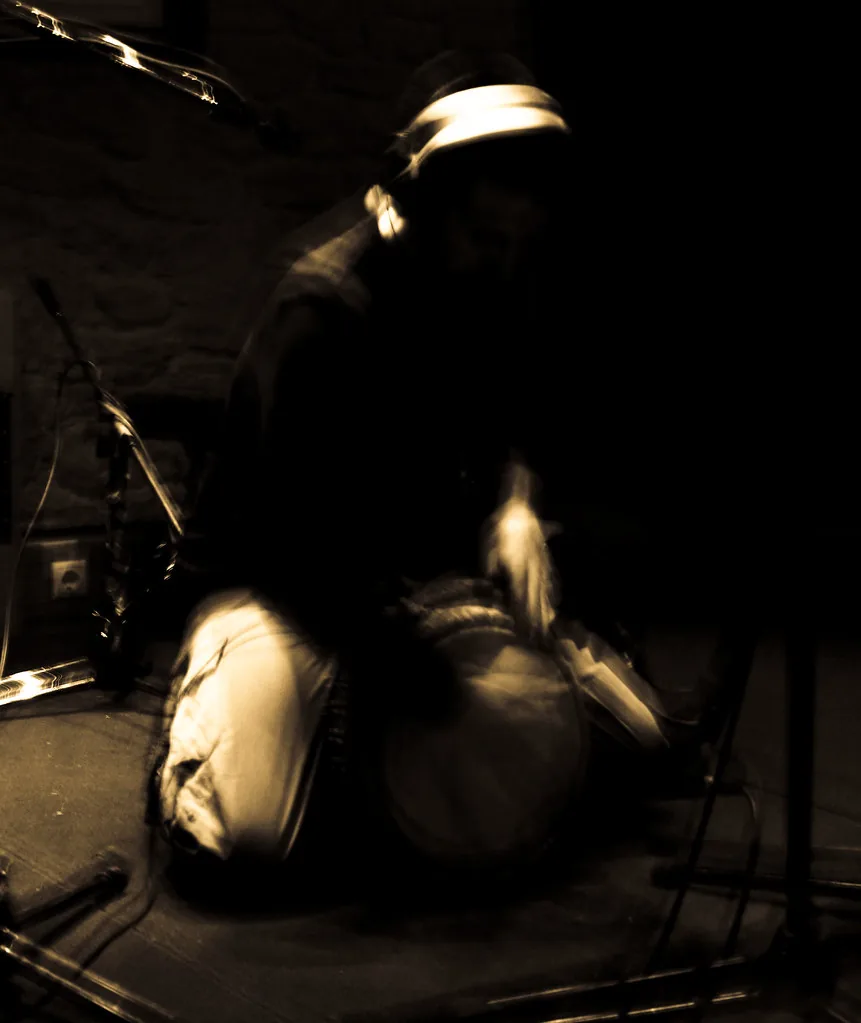
Here are some characteristics of the Kuku rhythm:
* Origin: West Africa
* Cultural meaning: deep and connected to Manding tradition
* Instrument: djembe
* Occasions: ceremonies, celebrations, traditional dances
* Character: energetic, cheerful, communal
In short, the Kuku rhythm has an important place in African culture. Played at many ceremonies and celebrations, it conveys the joy and togetherness of these occasions.
The technical secrets of playing the Kuku rhythm on the djembe
The Kuku rhythm requires good technique to play well. Fundamental strokes are essential to its basic pattern. Traditional variations add complexity and interest.
To play the Kuku rhythm on the djembe, you need to master these elements. You can learn more about the rhythm’s technical secrets online.
Here are some key points to consider when learning the Kuku rhythm:
- Fundamental strokes are essential for creating the basic rhythm.
- Traditional variations add complexity and interest to the rhythm.
- Accompaniments and solos are needed to create a complete rhythm.
By mastering the technical secrets of the Kuku rhythm, you can play this complex pattern on the djembe with confidence and precision. Practice regularly to improve your command of the Kuku rhythm.
| Element | Importance |
|---|---|
| Fundamental strokes | Essential |
| Traditional variations | Important |
| Accompaniments and solos | Necessary |
Mamady Keïta’s distinctive teaching approach
Mamady Keïta was known for his distinctive teaching. He emphasized practice and experience. He encouraged his students to explore the djembe.
This approach earned him widespread international recognition. Today, his school is represented in at least seven countries.
Here are some features of his teaching approach:
- An emphasis on practice and experience
- A personalized approach for each student
- Respect for tradition and culture
Mamady Keïta also published CDs and books about Manding music and culture. His work is valued for its quality and its importance in preserving djembe traditions.
You can learn more about his work by visiting this ethnomusicology resource.
In short, Mamady Keïta’s teaching approach was distinctive and effective. His work has had a significant impact on the preservation of Manding culture. His teaching and publications are valuable resources for enthusiasts of the djembe and African music.
Passing on Kuku: between tradition and modernity
The transmission of Kuku combines tradition and modernity. Kuku is taught in villages, and its teaching is adapted for schools. This keeps the rhythm alive while making it relevant to today’s world.
Tradition is essential to passing on Kuku. It preserves the techniques and knowledge of past generations. Modernity, meanwhile, opens up new ways to teach Kuku. Schools can share this knowledge with more people.
Teaching in villages
In villages, people learn Kuku informally. Masters teach through observation and practice. This method keeps the tradition alive and maintains the quality of instruction.
Adapting to modern schools
Modern schools need to adapt how they teach Kuku. They use methods and tools to help students learn. This allows them to reach more young people and promote the tradition.

In conclusion, passing on Kuku depends on a balance between tradition and modernity. Villages and schools both play a key role. Together, they offer a rich and comprehensive learning experience.
Kuku’s influence on contemporary Manding music
Kuku has a major impact on today’s Manding music. Festivals and celebrations play an essential role. They bring djembefolas together and give them a chance to show their talents.
These events help promote the Kuku rhythm and Manding music. They also play a key role in preserving them.
New generations of djembefolas have an important role. They blend Kuku with other traditional rhythms in their compositions, creating modern, vibrant music.
Festivals provide a valuable setting for these young artists. There, they can share their love of Manding music.
Events such as the International Percussion Biennial in Conakry, Guinea, celebrate Kuku and Manding music. These festivals attract artists and music lovers from many places. They help introduce more people to Manding music and the Kuku rhythm.
The rhythmic subtleties of Kuku according to Mamady Keïta
Kuku is a West African rhythm known for its demanding rhythmic subtleties. Mamady Keïta, a djembe expert, developed a distinctive way of playing Kuku. His method emphasizes precision and finesse.
Kuku’s rhythmic subtleties draw on several striking techniques: tone, slap, bass and pop. These techniques enrich the sound of the djembe. For more information, see Mamady Keïta’s book “A Life for The Djembe,” published in 1999.
Here are some key aspects of Kuku’s rhythmic subtleties:
- Using different striking techniques to create a rich range of sounds
- Emphasizing finesse and precision when playing Kuku
- Recognizing the importance of practice and training in mastering Kuku’s rhythmic subtleties
In conclusion, Kuku’s rhythmic subtleties are essential and require considerable djembe skill. Mamady Keïta developed a distinctive way of playing Kuku that emphasizes precision and finesse.
Conclusion: Kuku’s living legacy and future
The Kuku rhythm, part of Mamady Keïta’s legacy, has an essential place in today’s Manding music. It does not stand still: new generations of djembefolas adapt it to the present day.
Traditional festivals and celebrations are occasions when Kuku shines. It appeals to a growing audience. The way it is taught has also evolved, with Kuku now included in schools and training programs.
Mamady Keïta said that success comes from hard work and passion. This legacy, deeply rooted in Guinea, will live on. New creations will enrich it, and it will reach lovers of African music around the world.