
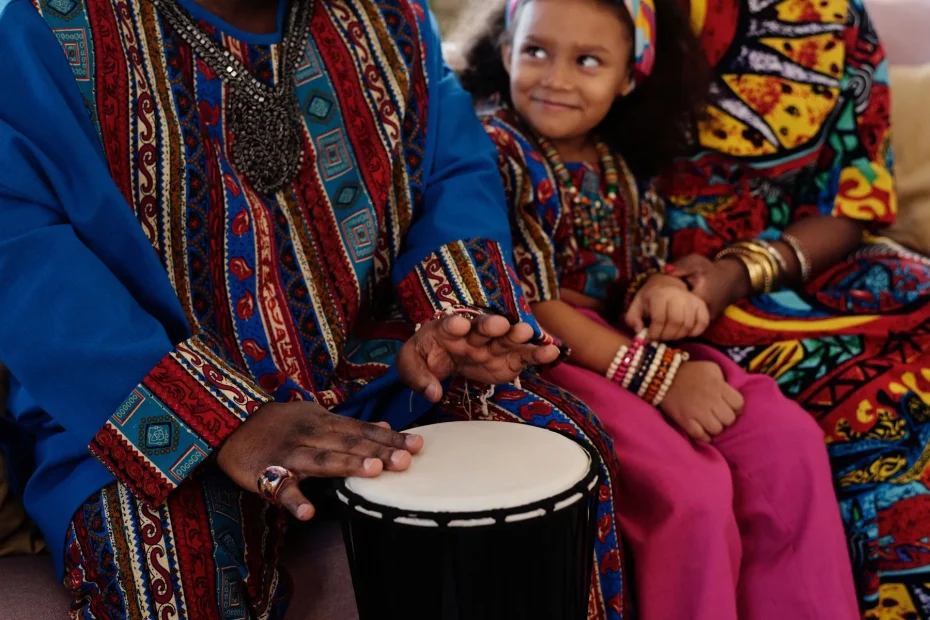
Mamady Keïta is a renowned Guinean musician. He devoted his life to music and the djembe. To learn more about him, read the biography of Mamady Keïta.
The life of Mamady Keïta reflects his love of music, especially the djembe. He played for decades and produced 11 CDs as well as 8 videos and DVDs to teach the djembe.
The biography of Mamady Keïta tells the story of a man who devoted his life to music. He inspired many musicians and djembe enthusiasts. His work continues to influence people around the world.
Mamady Keïta’s traditional roots in Guinea
Mamady Keïta was born in Balandougou, Guinea. He came from a family of musicians and griots. He began learning African percussion as a child. His country, Guinea, is known for its rich musical traditions and for the djembe, an ancient instrument.
The 1980s were a crucial decade for the djembe. Masters such as Mamady Keïta helped introduce it to audiences worldwide. The djembe is played with the hands and fingers. You can learn more at faire-du-djembe.fr or in books about Manding music on buecher.de.
Birth and family heritage in Balandougou
Mamady Keïta was born into a family of musicians. This heritage nurtured his passion for Manding music and African percussion. His early training also played an essential part in developing his talent.
The influence of Manding culture
Manding culture profoundly influenced Mamady Keïta. His music reflects the heritage of Guinea. Manding music is known for its complex percussion and rich melodies, passed down from generation to generation.
Exceptional mastery of the djembe
Mamady Keïta was a master of the djembe. He developed a distinctive style rooted in traditional African percussion.
The djembe is a versatile instrument that has been used for more than 700 years. It can be played in different ways, giving it great flexibility. Mamady Keïta pushed the instrument’s boundaries, influencing African music and music beyond Africa.
Here are some features of Mamady Keïta’s style:
- Use of basic djembe techniques, such as palm and finger strokes
- Development of new techniques and styles, including polyrhythms and complex meters
- Influence of traditional African percussion alongside modern and contemporary music
Mamady Keïta mastered the djembe through talent, dedication and constant exploration of the instrument. His influence on African music and beyond is immense. His legacy continues to inspire musicians and percussionists today.
| Instrument | Origin | Characteristics |
|---|---|---|
| Djembe | Africa | Versatile; played with the hands, fingers and palms |
A Life for the Djembe: The Biography of Mamady Keïta and his international career
Mamady Keïta was a master of Manding music. He traveled around the world to share his love of the djembe. His biography shows his commitment to music and Guinean culture.
He joined Guinea’s national ballet, giving him the opportunity to introduce his music to the world. Here are some major milestones in his career:
- He founded the Tam Tam Mandingue percussion school to teach Manding music.
- He released albums such as “Wassolon” and “Nankama,” showcasing his mastery of the djembe.
- He collaborated with other artists to promote Manding music and Guinean culture.
Mamady Keïta embodied dedication to and passion for music and culture. His international career shows how music can influence people around the world.
The master’s cultural and educational legacy
Mamady Keïta devoted his life to sharing traditional knowledge and preserving ancestral rhythms. His cultural heritage was rich and shaped by the oral tradition of his village, Balandougou, in Guinea.
His autobiography shows his love of the djembe and his desire to share his knowledge with the world.
Mamady Keïta created a method for teaching the djembe that helps students of all levels learn traditional rhythms.
Students discover Manding culture while improving their musical skills.
Passing on traditional knowledge
Passing on knowledge was essential to Mamady Keïta. He devoted himself to preserving ancestral rhythms and sharing them with future generations.
He created complementary teaching resources comprising three televised volumes and a book with a CD. They are accessible even to people who cannot read music.
Innovations in djembe teaching
Mamady Keïta introduced new ways to teach the djembe. His method enables everyone to progress and learn traditional rhythms.
Students discover Manding culture and develop their musical skills.
Preserving ancestral rhythms
Preserving ancestral rhythms was crucial to Mamady Keïta. He devoted himself to protecting them and passing them on to future generations.
He created complementary teaching resources comprising three televised volumes and a book with a CD. They are accessible even to people who cannot read music.
| Year | Event | Description |
|---|---|---|
| 1964 | Joined the Djoliba National Ballet | Mamady Keïta joined the Djoliba National Ballet at the age of 14. |
| 1988 | Founded Sewa Kan | Mamady Keïta founded his musical group, Sewa Kan. |
| 1995 | Release of “Mögöbalu” | Mamady Keïta released his CD “Mögöbalu.” |
Conclusion: Mamady Keïta’s lasting impact on world music
African master percussionist Mamady Keïta left his mark on world music. His mastery of the djembe and his love of African percussion inspired many musicians. He helped introduce and preserve Manding music.
Mamady Keïta left a living legacy through his schools and students, who continue to pass on his knowledge. His teaching method introduced many musicians to the art of the djembe.
Mamady Keïta’s work is recognized around the world. His influence continues to shape music today and demonstrates his importance to musical diversity.