
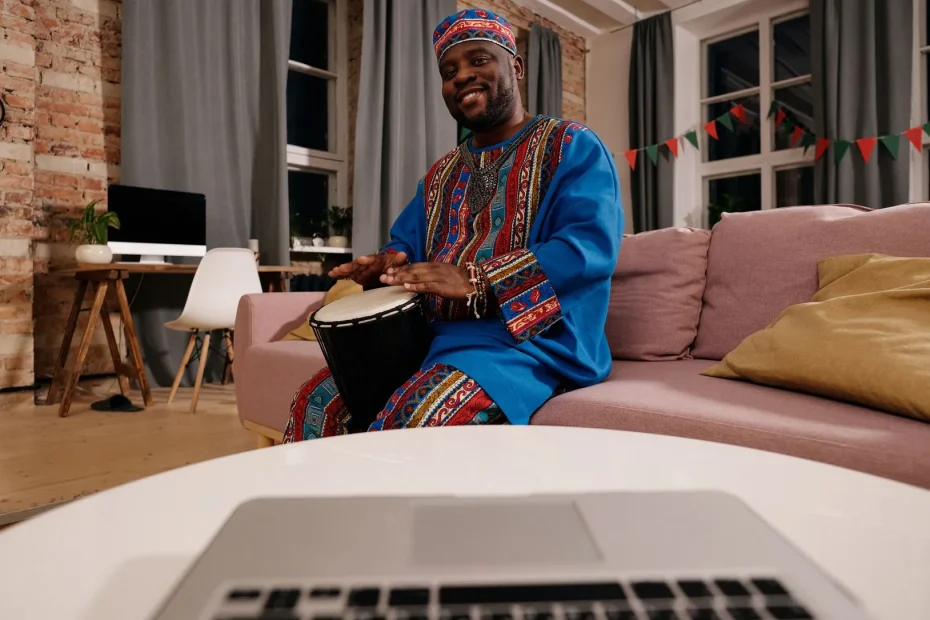
The djembe is a key instrument in African music. Mamady Keïta, a djembe master, shared his legacy in Djolé. This work highlights his role in preserving African music. To learn more, explore online discographies.
The Manding djembe holds an essential place in Manding culture. Mamady Keïta made a major contribution to African music. His legacy continues to inspire musicians and enthusiasts today.
African music is rich and varied. The djembe is one of its symbols. Mamady Keïta introduced Manding djembe to a wide audience. In doing so, he helped spread African music around the world. The profiles of great players published on these sites bear witness to this.
The story of Mamady Keïta: from Balandougou village to the international stage
Mamady Keïta, a master of Manding percussion, was born in the village of Balandougou in Guinea. He learned to play the djembe at a very young age. He became a leading ambassador for African music with the Djoliba National Ballet.
He began playing the djembe in his village. He later joined the Djoliba National Ballet, where he gained international recognition. He is now regarded as one of the greatest masters of the Manding djembe.
To learn more about Mamady Keïta’s legacy and African music, visit Djembe Diyamu. You will find information about traditional rhythms and Manding culture there.
Guinean origins and traditional training
Mamady Keïta’s roots run deep in Guinean culture. His traditional training on the djembe was shaped by the masters of Manding percussion in his home village.
His journey with the Djoliba National Ballet
With the Djoliba National Ballet, Mamady Keïta shared his passion for African music around the world. He traveled to many countries, presenting traditional Manding djembe rhythms to diverse audiences.
Worldwide recognition for the master djembefola
Today, Mamady Keïta is recognized as one of the greatest masters of the Manding djembe. His legacy, Mamady Keïta’s legacy in Manding djembe, inspires future musicians and African music enthusiasts.
The Manding djembe: a sacred instrument at the heart of tradition
The Manding djembe is a very important percussion instrument in Guinea. It accompanies traditional songs and dances. Griots often play the djembe at ceremonies and celebrations.
Oral tradition is essential to Manding culture. The djembe helps pass stories and legends from one generation to the next. The book “History Dances” recounts the history of the djembe and explains its significance.
The djembe also celebrates Guinea’s cultural heritage. Traditional rhythms, such as Djoliba, are played at celebrations. They strengthen bonds among community members.
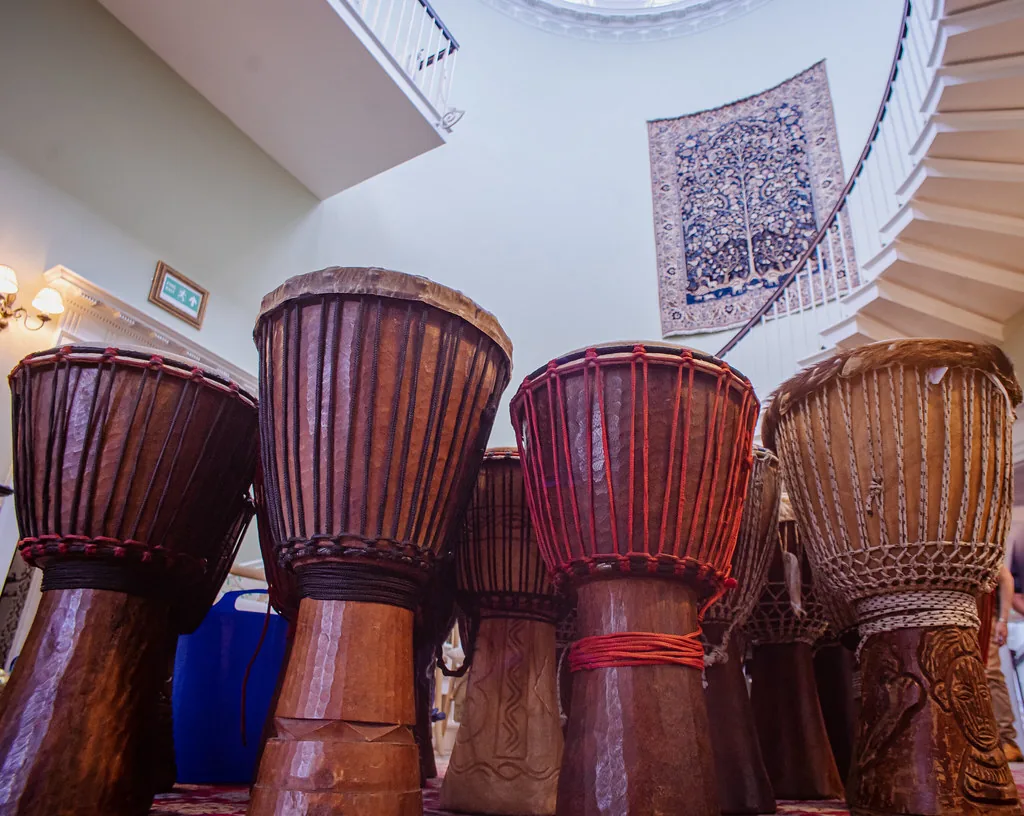
Finally, the djembe offers a way to discover the richness of Guinea’s oral tradition. On faire-du-djembe.fr, you can learn to play the djembe and discover the secrets of this sacred instrument.
Mamady Keïta’s distinctive teaching: technique and philosophy
Mamady Keïta was a master of the Manding djembe. He developed a distinctive teaching method designed to preserve traditional rhythms and pass on cultural values.
The djembe is a key instrument in African music. Mamady Keïta devoted his life to protecting and promoting this tradition. His teaching was deeply rooted in cultural heritage and African philosophy.
A groundbreaking teaching method
Mamady Keïta’s method focuses on learning traditional rhythms. He encouraged his students to explore African music and develop their own style. This approach highlights the richness and diversity of African music.
Preserving traditional rhythms
Traditional rhythms are essential to African music. Mamady Keïta devoted his life to preserving and passing them on. His teaching reflects the depth and diversity of African music.
Djolé: Mamady Keïta’s legacy in Manding djembe
Mamady Keïta, a djembe master, left a lasting legacy in African music. His school, Tam Tam Mandingue, became a leading place to learn the djembe and Manding percussion.
Mamady Keïta’s recordings and publications helped spread African music and oral tradition. His albums introduced traditional djembe rhythms such as Djolé, Kuku and N’Goron, now enjoyed by listeners around the world.
The Tam Tam Mandingue school
The Tam Tam Mandingue school, founded by Mamady Keïta, offers classes in djembe and Manding percussion. Students can learn traditional djembe techniques and rhythms, along with the cultural values associated with African music.
Recordings and publications
Mamady Keïta’s recordings include albums such as “Djolé” and “Kuku”. These albums present traditional djembe rhythms and showcase Manding percussion.
Influence on new generations
Mamady Keïta’s legacy has influenced new generations of musicians and dancers. Young artists can now learn traditional djembe and Manding percussion techniques, then incorporate them into their own music and performances.
| Rhythm | Origin | Description |
|---|---|---|
| Djolé | Temine and Mendenyi | Traditional djembe rhythm |
| Kuku | West African | Rhythm played at the full moon and on other occasions |
| N’Goron | Senufo | Rhythm played after the initiation of young girls |
Mamady Keïta’s influence on Manding djembe
Mamady Keïta was an undisputed master of the Manding djembe. His cultural heritage is deeply rooted in Manding musical tradition. His compositions and playing style influenced many musicians, enriching Manding percussion.
Thanks to Mamady Keïta, the Manding djembe grew in popularity around the world. His exceptional talent and technical mastery introduced this African percussion instrument to a wider audience. Many artists drew inspiration from his compositions and incorporated their influence into their own work.
Through Mamady Keïta, the Manding djembe continues to resonate with unmatched energy and passion. His dynamic, profound music captivates listeners and transports them into a world of traditions and cultures. Mamady Keïta’s legacy in Manding djembe reflects the richness and diversity of African music.
Mamady Keïta’s influence on Manding djembe
| Influence | Description |
|---|---|
| Playing technique | Mamady Keïta developed a distinctive, innovative playing technique that influenced many musicians. His technical mastery helped raise the standard of Manding djembe playing. |
| Composition | Mamady Keïta composed many pieces that marked the history of the Manding djembe. Often inspired by Manding tradition and history, his compositions enriched the Manding percussion repertoire. |
| Performance | Mamady Keïta performed many pieces of traditional and contemporary music, bringing a fresh perspective to Manding percussion. His distinctive style and passion for music influenced many musicians. |