
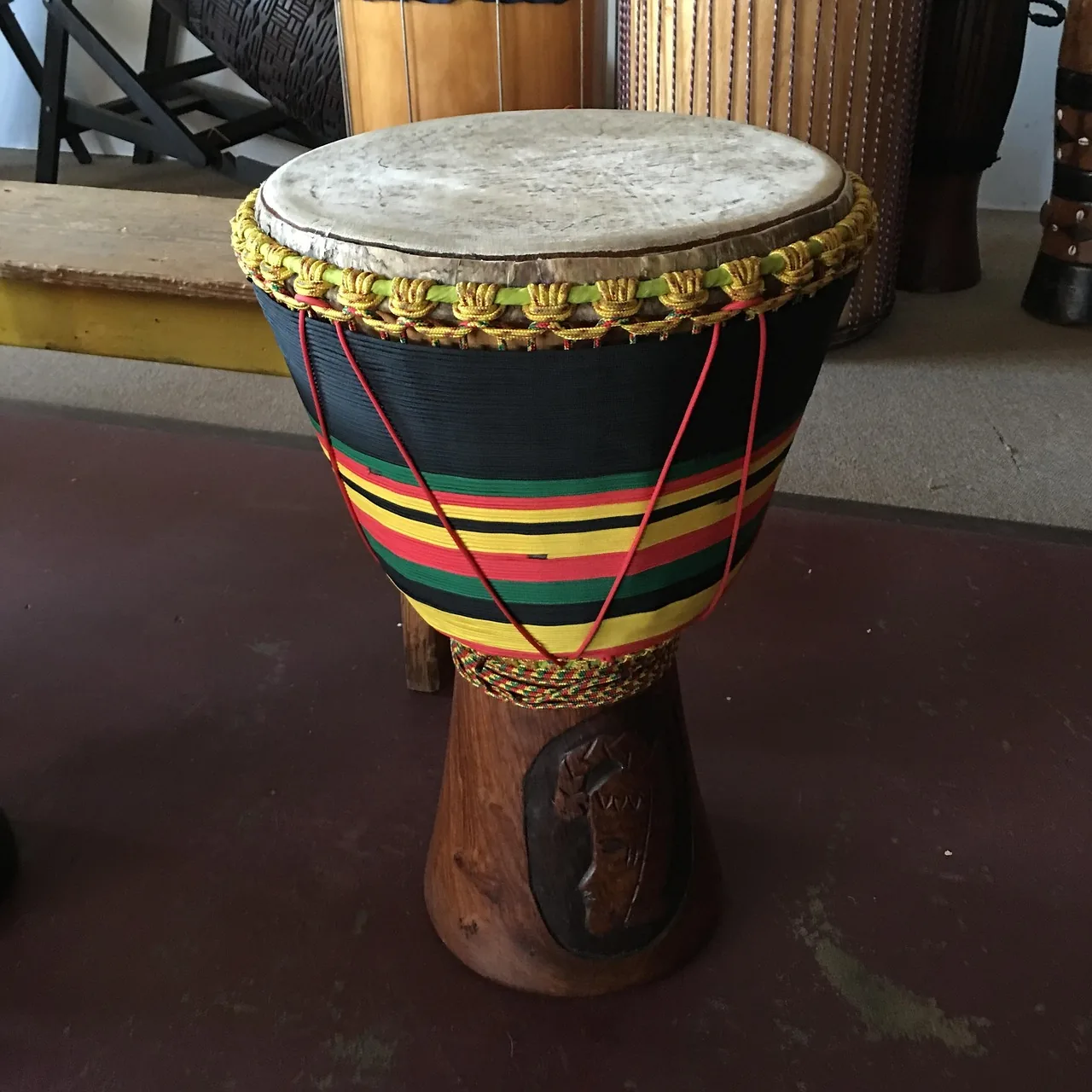
The djembe is an African percussion instrument that offers many benefits for well-being and mental health. Playing the djembe can reduce stress, develop creativity, connect us with African music, and improve both physical and mental well-being. The benefits of the djembe are supported by scientific studies and accounts from practitioners. Discover how the djembe can improve your well-being and mental health.
Playing the djembe can help reduce stress and promote relaxation. Its hypnotic, meditative rhythms can release endorphins, the body’s feel-good chemicals, helping to ease stress and anxiety. Playing the djembe can help us refocus and relax as we become absorbed in its soothing rhythm.
The djembe also offers an opportunity to develop creativity. By exploring different rhythms and playing with other musicians, we can develop our own musical expression and create new rhythmic combinations. Regular djembe practice stimulates the imagination and opens up unexpected musical possibilities.
Moreover, the djembe provides a deep connection with African culture. This traditional African instrument offers a way to discover Africa’s rhythms, techniques, and musical traditions. Learning to play the djembe is an enriching musical experience that contributes to physical and mental well-being by opening up new cultural perspectives.
In the following sections, we will explore in more detail how the djembe can benefit social skills, cognitive abilities, concentration, and many other aspects of physical and mental well-being. Discover how the djembe can have a positive effect on your daily life and bring you joy and fulfillment.
Developing social skills through the djembe
One of the djembe’s main strengths is its effect on social skills. Playing the djembe in a group creates bonds between musicians, crosses cultural and language barriers, and strengthens teamwork. Drum circles and percussion groups also provide natural opportunities to meet new people with shared interests. This practice encourages social interaction and a sense of belonging to a community.
Therapeutic drumming lets participants express themselves freely through African music, creating a welcoming and supportive environment. Djembe sessions encourage the exchange of positive energy and social interaction.
When we play the djembe in a group, we learn to listen to other musicians and respond to their playing. This improves communication skills and builds self-confidence. The lively rhythms of African music create a joyful atmosphere and encourage self-expression, helping participants connect with themselves and others.
| Benefits of playing the djembe in a group: |
|---|
| Stronger social bonds |
| Overcoming cultural and language barriers |
| Developing communication skills |
| Improving self-confidence |
| Self-expression and connection with others |
“Playing the djembe in a group helped me meet wonderful people and form lasting friendships. African music is a universal language that brings people together and brings joy to our lives.” — Laura, djembe enthusiast
The benefits of the djembe for well-being and stress reduction
Playing the djembe can have remarkable effects on physical and mental well-being, as well as stress reduction. Its hypnotic, meditative music may release endorphins, also known as feel-good chemicals. These endorphins can lift mood, reduce stress, ease anxiety, and promote relaxation.
Regular djembe practice offers a musical escape, allowing us to refocus and find a sense of inner peace. Rhythm can be a means of relaxation, offering a deeply soothing experience for mind and body. Therapeutic drumming, often used in relaxation sessions, can help manage stress and release accumulated tension.
By exploring emotional expression through the rhythm of the djembe, we can discover a new way to understand ourselves and express our emotions. Playing the djembe offers a distinctive way to channel and release deep, often buried feelings. It creates space for creative expression while promoting mental relaxation.
In summary, the benefits of the djembe for well-being and stress reduction:
- Release of endorphins, the body’s feel-good chemicals
- Stress reduction and relief from anxiety
- A sense of calm and deep relaxation
- Exploration of emotional expression through rhythm
- Therapeutic drumming for stress management
The djembe therefore offers a powerful way to connect with ourselves and find mental and emotional balance. By making it part of a daily routine, we can enjoy its many benefits for physical and mental well-being.
| The benefits of the djembe for well-being and stress reduction | Description |
|---|---|
| Release of endorphins | Playing the djembe may release endorphins, the body’s feel-good chemicals, helping to reduce stress and promote relaxation. |
| Stress reduction and relief from anxiety | The djembe’s hypnotic rhythm can help reduce stress and soothe anxiety. |
| A sense of calm and deep relaxation | Regular djembe practice promotes deep relaxation and a sense of mental and physical calm. |
| Exploration of emotional expression through rhythm | The djembe offers a unique opportunity to explore and express emotions through its powerful rhythm. |
| Therapeutic drumming for stress management | Therapeutic drumming with the djembe can help manage stress and release accumulated tension. |
Improving cognitive abilities through the djembe
Playing the djembe can have a positive effect on cognitive abilities. Studies have shown that playing a musical instrument, such as the djembe, can improve memory, concentration, and intellectual abilities. Playing the djembe stimulates the brain in a distinctive way, encouraging connections between movement, hearing, and their coordination. Djembe practice also develops creativity by offering opportunities to create and explore new rhythmic combinations.
Playing traditional African music on the djembe requires coordination between the hands, fingers, and rhythm, stimulating different areas of the brain. This stimulation can help improve memory, particularly working memory, which is essential for handling several tasks at once. In addition, the concentration needed to play the djembe can strengthen attention and the ability to stay focused.
The djembe also offers an opportunity to develop creativity. By improvising rhythms and patterns, drummers can express their own style and experiment with new combinations of sounds. This creative exploration stimulates the brain and encourages artistic expression. It allows djembe players to develop their own musical identity while having fun.
Alongside its cognitive benefits, the djembe contributes to physical and mental well-being. Regular practice with this African percussion instrument offers a musical escape and a way to relieve stress and relax. By focusing on the rhythm and setting aside everyday concerns, drummers may enter a state of flow: complete immersion in the music that calms the mind and releases physical tension.
Improved cognitive abilities, greater creativity, and physical and mental well-being are all important benefits of playing the djembe. Whether alone, in a group, or in a drum circle, playing the djembe offers an enriching musical experience that stimulates the mind and nourishes the soul.
The cognitive benefits of the djembe at a glance:
- Improved memory
- Stronger concentration
- Greater creativity
- Stimulation of different areas of the brain
Connecting with African culture through the djembe
Playing the djembe offers a way to connect with African culture. The djembe is a traditional African instrument, and learning to play it introduces us to Africa’s rhythms, techniques, and musical traditions. This cultural connection enriches the musical experience and contributes to physical and mental well-being by opening up new musical and cultural perspectives.
The richness of African music
African music is renowned for its diversity and depth. Playing the djembe lets us explore the sounds and rhythms of this rich musical tradition. Djembe practice introduces us to different African musical styles, such as Afrobeat, Afro-jazz, highlife, and many others. Connecting with African culture through music can deepen our appreciation of this art form and its effect on physical and mental well-being.
Opening up new perspectives
Playing the djembe opens up new musical and cultural perspectives. By learning its playing techniques and rhythms, we immerse ourselves in a longstanding tradition passed down through generations in Africa. This practice introduces us to the songs, dances, and rituals that often accompany djembe music. It broadens our understanding of African culture and connects us with a rich, deeply rooted heritage.
A link to history and heritage
The djembe is far more than a musical instrument. It is an integral part of African history and heritage. By playing the djembe, we take part in preserving and passing on ancestral knowledge. It is also a way to honor the African musicians and craftspeople who shaped this unique instrument. Connecting with African culture through the djembe helps us understand and appreciate the importance of this tradition in African societies and contribute to the recognition of this intangible cultural heritage.
| Benefits of connecting with African culture through the djembe |
|---|
| Discovering African musical rhythms and techniques |
| Greater appreciation of African music |
| Opening up new cultural perspectives |
| Strengthening ties to African history and heritage |
Improving concentration through the djembe
Playing the djembe can improve concentration. By focusing on hand movements, finger placement, and the overall rhythm of the music, djembe players can set aside outside distractions and enter a state of full awareness and focus. Regular djembe practice can therefore develop concentration and strengthen the mind.
The djembe’s hypnotic, captivating rhythm demands sustained attention, encouraging concentration and allowing us to become fully absorbed in the music. By immersing ourselves in djembe practice, we also develop our ability to focus on a specific task, which can be useful in other areas of daily life.
The intense concentration required to play the djembe helped me develop my ability to focus on one thing at a time. This has had a positive effect on my work and studies, where I can now concentrate more effectively.
By improving our ability to concentrate, the djembe can have positive effects on our physical and mental well-being. Focusing on rhythm and movement can help us step away from negative or stressful thoughts, bringing a sense of calm and serenity.
The djembe thus offers a chance to escape from the outside world and immerse ourselves in an exciting, engaging activity. Whether we play alone or in a group, this practice helps us develop our ability to stay focused while enjoying the djembe’s many benefits for physical and mental well-being.
The benefits of concentration
Concentration is essential for completing everyday tasks, whether at work, in our studies, or even during simple leisure activities. By improving our concentration through the djembe, we can:
- Complete tasks more quickly and effectively
- Be more productive and reach our goals more easily
- Improve our memory and ability to retain information
- Avoid distractions and stay focused on what matters
- Live in the present and fully enjoy our activities
By developing our concentration through djembe practice, we can gain mental clarity and focus in every area of life, contributing to our physical and mental well-being.
The many benefits of playing the djembe
Playing the djembe offers many benefits for physical and mental well-being. These include developing social skills, reducing stress, improving cognitive abilities, connecting with African culture, and developing creativity.
Developing social skills: Playing the djembe in a group creates bonds between musicians, crosses cultural and language barriers, and strengthens teamwork. Drum circles and percussion groups also provide natural opportunities to meet new people with shared interests. This practice encourages social interaction and a sense of belonging to a community.
Reducing stress: The djembe’s hypnotic, meditative music may release endorphins, the body’s feel-good chemicals, which can reduce stress, ease anxiety, and promote relaxation. Regular djembe practice offers a musical escape, helps us refocus, and allows us to explore emotional expression through rhythm. Therapeutic drumming is also used to promote relaxation and manage stress.
Improving cognitive abilities: Studies have shown that playing a musical instrument, such as the djembe, can improve memory, concentration, and intellectual abilities. Playing the djembe stimulates the brain in a distinctive way, encouraging connections between movement, hearing, and their coordination. Djembe practice also develops creativity by offering opportunities to create and explore new rhythmic combinations.
Connecting with African culture: Learning to play the djembe introduces us to Africa’s rhythms, techniques, and musical traditions. This cultural connection enriches the musical experience and contributes to physical and mental well-being by opening up new musical and cultural perspectives.
Regular djembe practice allows us to explore and enjoy these many benefits while offering a means of musical expression and a source of overall well-being.
Conclusion
The djembe is far more than a simple musical instrument. It can have a significant effect on physical and mental well-being. Playing it can bring notable benefits, including relaxation, creativity, social connection, and a deep connection with African culture.
The benefits of the djembe are supported by scientific studies and accounts from practitioners that describe its positive influence on mental health. Regular djembe practice offers a musical escape, can improve cognitive abilities, and encourages a deeper connection with ourselves and others.
In conclusion, the djembe is a powerful instrument for improving balance and overall well-being. Whether the aim is to reduce stress, develop creativity, improve social connections, or simply connect with African culture, playing the djembe is an enriching activity that can benefit physical and mental well-being.
FAQ
What are the benefits of the djembe for well-being and mental health?
The djembe can have a positive effect on physical and mental well-being. It can help reduce stress, develop creativity, connect us with African music, and improve both physical and mental well-being. Studies have shown that regular djembe practice can promote relaxation, stress management, and emotional expression through rhythm.
How does the djembe help develop social skills?
Playing the djembe in a group creates bonds between musicians, crosses cultural and language barriers, and strengthens teamwork. Drum circles and percussion groups also provide natural opportunities to meet new people with shared interests. This practice encourages social interaction and a sense of belonging to a community.
How does the djembe help reduce stress?
The djembe’s hypnotic, meditative music may release endorphins, the body’s feel-good chemicals, helping to reduce stress, ease anxiety, and promote relaxation. Therapeutic drumming is also used to encourage relaxation and manage stress. Regular djembe practice can help us refocus and explore emotional expression through rhythm.
How does the djembe improve cognitive abilities?
Studies have shown that playing a musical instrument, such as the djembe, can improve memory, concentration, and intellectual abilities. Playing the djembe stimulates the brain in a distinctive way, encouraging connections between movement, hearing, and their coordination. Djembe practice also develops creativity by offering opportunities to create and explore new rhythmic combinations.
How does the djembe help us connect with African culture?
The djembe is a traditional African instrument, and learning to play it introduces us to Africa’s rhythms, techniques, and musical traditions. This cultural connection enriches the musical experience and contributes to physical and mental well-being by opening up new musical and cultural perspectives.
How does the djembe improve concentration?
Playing the djembe requires concentration on hand movements, finger placement, and the overall rhythm of the music. This intense focus helps us set aside outside distractions and enter a state of full awareness and concentration. Regular djembe practice can therefore develop concentration and strengthen the mind.
What are the many benefits of playing the djembe?
Playing the djembe offers many benefits for physical and mental well-being. These include developing social skills, reducing stress, improving cognitive abilities, connecting with African culture, and developing creativity. Regular djembe practice allows us to explore and enjoy these many benefits while offering a means of musical expression and a source of overall well-being.