
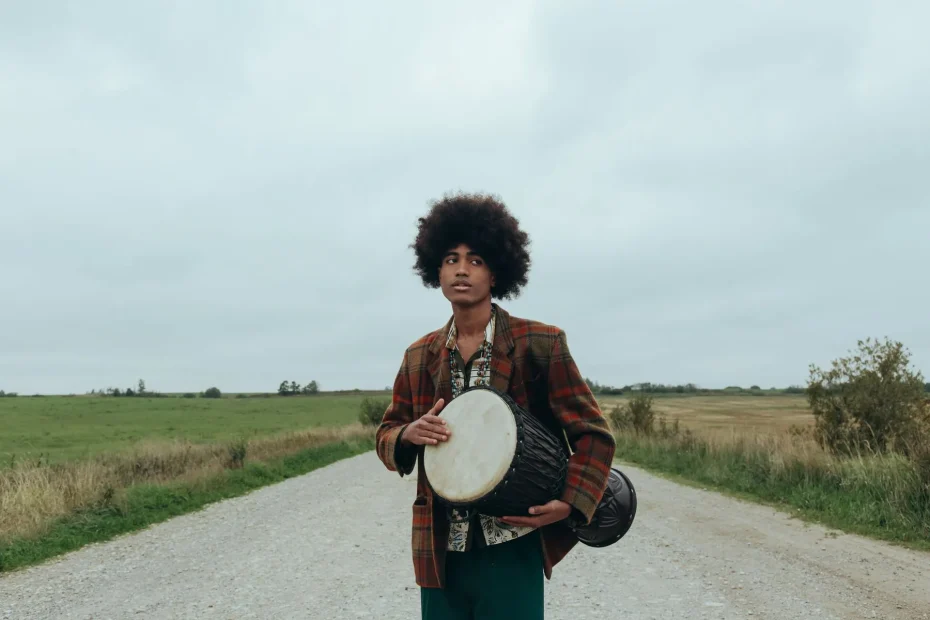
The djembe is a percussion instrument of African origin that offers many possibilities for experienced players. To improve their djembe playing and push the boundaries of their art, players can explore a range of advanced techniques. These include mastering complex rhythms, using advanced percussion techniques, and experimenting with new exercises and movements. By exploring them, djembe players can develop their technique and musicality and create impressive percussion performances.
Complex Djembe Rhythms
Advanced djembe players can perform complex rhythms that require strong coordination and a thorough understanding of different African rhythmic patterns. These rhythms include polyrhythms and syncopation, which add depth and complexity to djembe music. Advanced players can also incorporate percussion techniques such as rolls, breaks, and rhythmic variations to enrich their playing and create dynamic performances.
By exploring complex djembe rhythms, advanced players can create engaging compositions with stimulating rhythms. Polyrhythms, which involve playing several layered rhythmic patterns at the same time, are particularly common in African music. They create a rich sonic texture and bring variety to djembe performances.
Syncopation shifts rhythmic accents, creating moments of tension and surprise in the music. Advanced players can incorporate it into their compositions to surprise audiences and add another rhythmic dimension to their djembe playing.
To enrich their djembe playing, advanced players can also master more elaborate percussion techniques. Rolls, for example, involve playing repeated rhythmic patterns quickly, creating a sense of flow and continuity in the music. Breaks are sudden, pronounced stops that create moments of tension and release in a performance. Rhythmic variations allow players to explore different ways of playing the same rhythm, bringing more variety and expression to their djembe playing.
Example of a complex djembe rhythm:
| Rhythm | Technique |
|---|---|
| Mandinka | Use of polyrhythms and syncopation |
| Dununba | Fast rolls and accented breaks |
| Kakilambe | Rhythmic variations to create distinctive patterns |
By incorporating these complex rhythms and advanced percussion techniques into their playing, experienced djembe players can create powerful, dynamic performances. This takes practice, technical mastery, and a thorough understanding of African rhythmic traditions. By exploring complex djembe rhythms, they can push the boundaries of their art and offer audiences distinctive musical experiences.
Improving Your Djembe Playing
To improve their djembe playing, advanced players can focus on exercises that strengthen their technique and precision. These may include exercises in hand coordination, rhythmic independence, and polyrhythm. They can also become familiar with different playing styles, such as solo playing, accompaniment, and improvisation, to develop their musical expression and overall command of the djembe.
- Hand coordination exercises: these help players improve how well their hands work together. One example is to play a different rhythmic pattern with each hand, then gradually combine the patterns.
- Rhythmic independence exercises: these enable players to play independent rhythms with each hand. They help develop rhythmic versatility and hand coordination.
- Polyrhythm exercises: these teach players to play several rhythms simultaneously. They develop the ability to maintain a steady tempo while adding complex rhythmic variations.
By focusing on these advanced exercises, djembe players can gradually improve their technique and creativity while extending the range of their playing. They can explore new rhythms, work on faster transitions, and master more complex patterns. Regular practice will deepen their understanding of the djembe and help them get the most out of their instrument.
Here is an example of an advanced djembe exercise:
| Advanced djembe exercise | Description |
|---|---|
| Polyrhythmic pattern | This exercise involves playing a polyrhythmic pattern using different parts of the djembe. The player can explore different patterns and rhythmic variations to create a distinctive composition. |
By practising these advanced exercises regularly, experienced players can continue to develop their djembe playing, push the boundaries of their creativity, and create exceptional musical performances.
Pushing the Boundaries of Djembe Playing
Advanced djembe players can push the boundaries of their playing by exploring new techniques and experimenting with advanced musical ideas. By using unconventional playing techniques, exploring dynamics and subtle differences in sound, and incorporating innovative rhythmic patterns, they can create powerful, original performances that captivate audiences.
To push the boundaries of djembe playing, players need to keep exploring and practising new techniques. By practising and studying the playing of djembe masters, they can gain a deep understanding of the instrument and its many possibilities.
Experimentation and creativity are essential to pushing the boundaries of djembe playing. By daring to try new ideas and approaches, advanced players can discover distinctive sounds and innovative ways to play.
Advanced players also commonly use ornaments and special sound effects. These subtle additions, such as glissandos, tongue strokes, and harmonics, can turn an ordinary performance into something extraordinary.
To illustrate these ideas, here are some examples of advanced djembe playing techniques:
| Technique | Description |
|---|---|
| Roll | A technique that involves playing fast rolls on the djembe with the fingers. |
| Glissando effect | A technique that involves sliding the hand across the surface of the djembe to produce a smooth, sliding sound. |
| Harmonics | A technique that involves striking the djembe to produce harmonics and ethereal tones. |
With practice and experimentation, advanced players can push the boundaries of their djembe playing and create distinctive, memorable performances. However, it is important to remember that advanced djembe playing technique should serve artistic expression and the sharing of a passion for music with audiences, rather than showing off.
Conclusion
Advanced djembe playing techniques open up new possibilities for experienced players and allow them to push the boundaries of their art. By exploring complex rhythms, refining their technique, and moving beyond conventional approaches to djembe playing, advanced players can create impressive, distinctive musical performances. With regular practice and unwavering determination, they can continue to progress and refine their playing, offering exceptional musical experiences to both their audiences and themselves.
There are many playing tips for experienced djembe players. From complex rhythms and advanced percussion techniques to new exercises and movements, players can develop their technique and musicality. By focusing on exercises that strengthen their coordination, precision, and rhythmic skills, they can improve their djembe playing and create remarkable performances.
Ultimately, advanced djembe playing techniques give experienced players the opportunity to expand their creativity and musical expression. By exploring new techniques, experimenting with advanced musical ideas, and continually challenging themselves, they can bring powerful, captivating, and distinctive performances to life that honour the richness of this iconic African percussion instrument.
FAQ
What are advanced djembe playing techniques?
Advanced djembe playing techniques include mastering complex rhythms, using advanced percussion techniques, and experimenting with new exercises and movements.
What complex rhythms can be played on the djembe?
Complex djembe rhythms include polyrhythms and syncopation, which add depth and complexity to the music played on the instrument.
How can you improve your djembe playing?
To improve their djembe playing, advanced players can focus on exercises that strengthen their technique and precision and become familiar with different playing styles.
How can you push the boundaries of djembe playing?
To push the boundaries of djembe playing, advanced players can explore new techniques, experiment with advanced musical ideas, and move beyond conventional approaches to the instrument.