
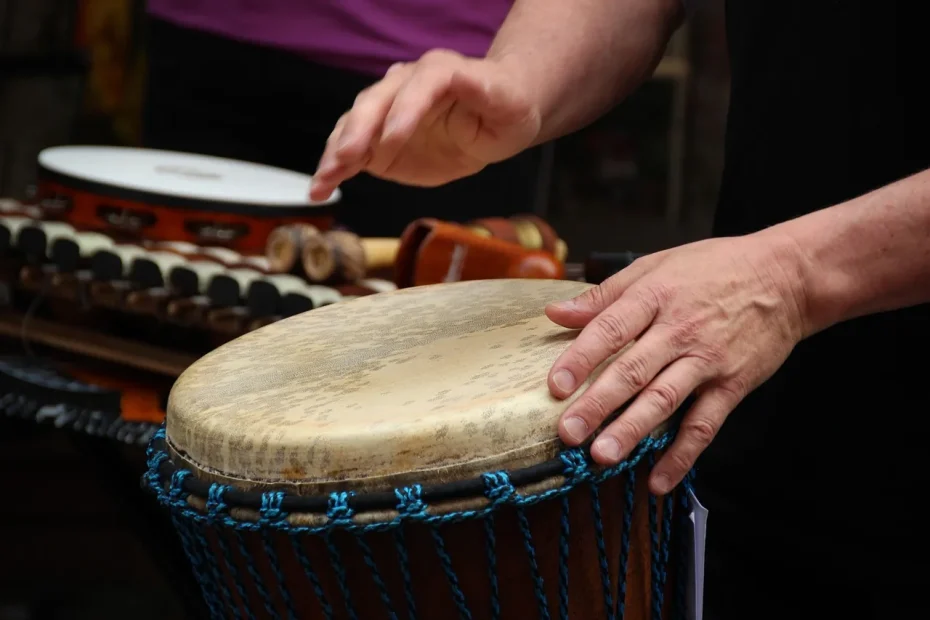
As you turn a corner, you come across a percussionist playing a thrilling solo on a djembe. Their passion, sense of rhythm, and the energy behind every strike… it all seems to vibrate right through your chest. You cannot help but be moved. What if you gave it a try, too?
The idea appeals to you, but doubts soon creep in. Is it really sensible to learn music as an adult, especially on such a physical, rhythm-based instrument? Would it be too difficult?
Those fears are largely unfounded. Whether you already know a little music theory or are starting from scratch, percussion offers an especially accessible way in. Your body and your feel for the music soon become more important than theory.
With a teacher’s help, progress is often quick and rewarding. In just a few lessons, you can establish the basics and start enjoying yourself. And one thing is certain: once you discover the joy of rhythm, it is hard to stop.
Why does percussion appeal to so many adults?
Unlike many instruments, percussion lets you get started straight away. You do not need hours of theory before making your first sounds. You can play, feel, and experiment from the very first minutes. That accessibility is often what gives adults the confidence to begin without pressure.
The connection with your body is central, too. Striking, tapping, keeping the beat… percussion engages your listening, coordination, and physical senses all at once. You do more than simply “play”: you experience the rhythm. This almost instinctive aspect helps you reconnect with something natural, far from an overly academic approach to learning.
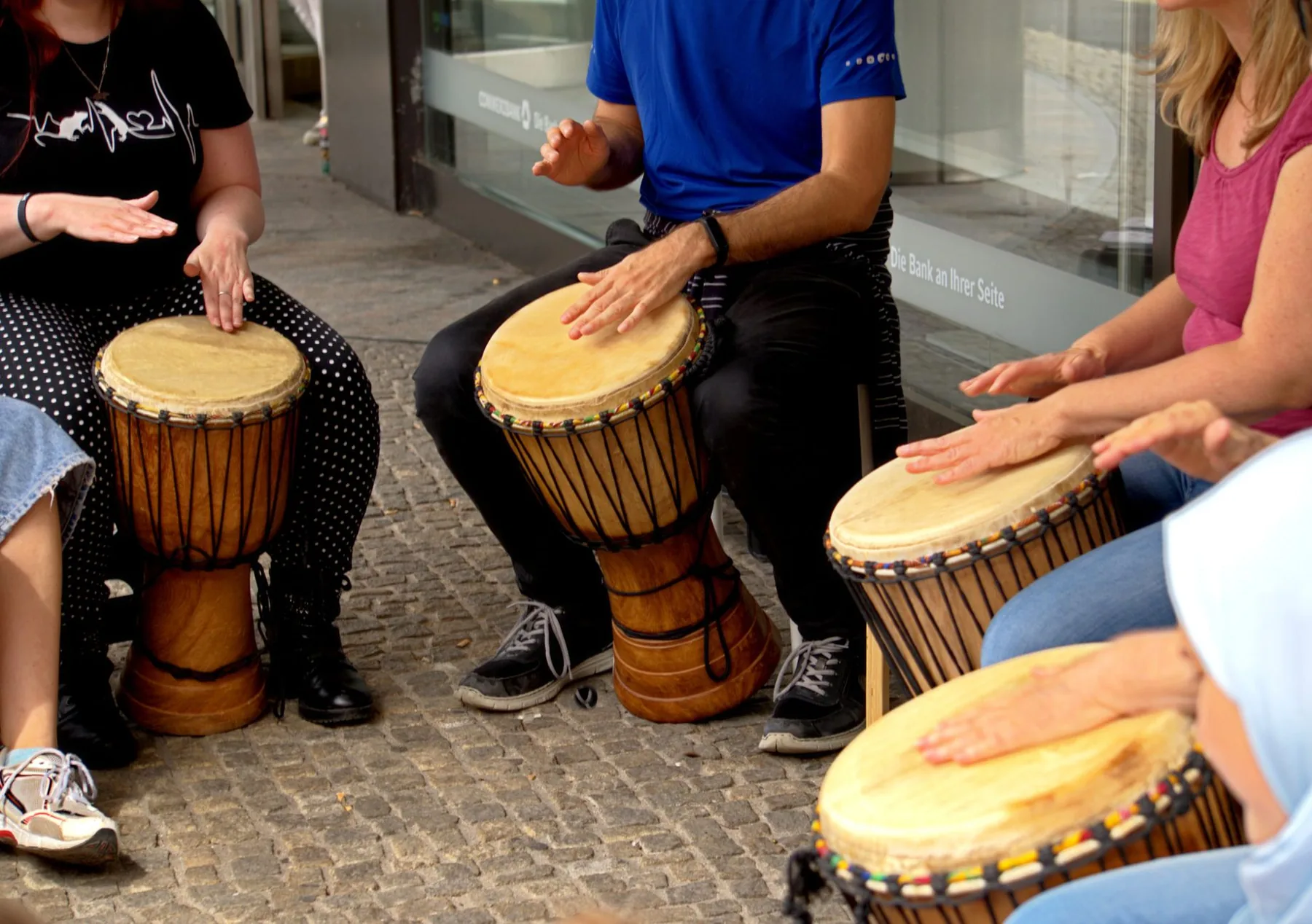
Another major advantage is the variety of instruments. From a quiet cajón you can set up in your living room to a djembe that brings people together, or a full drum kit, everyone can find an instrument that suits them. Some will prefer the energy of playing with others; others will enjoy a more reflective moment. Anything is possible.
It is hard to overlook the immediate enjoyment percussion brings. Before long, you can accompany a simple song, repeat a rhythm, or even improvise. That quick sense of achievement is especially motivating when you are starting as an adult.
Misconceptions that needlessly hold adults back
Still hesitant to take the plunge? Take heart: most obstacles have more to do with deeply held beliefs than with reality. Challenging those misconceptions is already a first step toward learning.
“You have to start young to be good”
This is probably the most common cliché. While it is true that some habits develop earlier in life, adults have valuable strengths of their own:
- – an ability to concentrate;
- – more effective coordination;
- – discipline;
- – an understanding of instructions.
In practice, these strengths often make it possible to improve in a more structured and effective way. With guidance, you can progress quickly, particularly through percussion lessons at home that introduce you to the basics of rhythm in just a few sessions.
“I have no sense of rhythm”
Many people convince themselves of this, but they are mistaken. A sense of rhythm is not a gift reserved for a few people: it is a skill you can develop. With simple exercises, a metronome, and a little consistency, your ear and body gradually learn. The progress may surprise you.
“Percussion is too physical”
Yes, some styles take energy, but none of this is beyond your reach. You learn gradually, at a pace that respects your fitness and abilities. Besides, the physical side is also an advantage. It makes playing lively, engaging, and almost liberating.
“I’ll look foolish in front of others”
Worrying about what others think is common, especially in a group class. But everyone starts somewhere, and learning environments are generally supportive. The pleasure of playing soon outweighs those fears.
The real challenges of starting percussion as an adult
Percussion may be accessible, but it still presents challenges. None is insurmountable: understanding them makes them easier to manage.
Coordinating your movements
One of the first obstacles, especially on instruments such as a drum kit, is coordination. Getting your hands to work independently, sometimes while adding your feet, takes some adjustment. At first, your brain seems to resist a little… then the movements begin to become automatic.
Keeping a steady tempo
Playing in time is one thing. Maintaining a precise tempo is another. Many beginners speed up or slow down without noticing. A metronome then becomes a valuable aid, helping you steady your playing and build a solid sense of rhythm.
Practicing regularly
As with anything you learn, the real challenge is not just starting… it is keeping going. Between daily commitments and tiredness, practicing regularly can prove harder than expected. Yet short, repeated sessions often bring the best results.
Daring to let go
Beyond the technical aspects lies a subtler challenge: allowing yourself to loosen up. Percussion invites you to express yourself, feel the music, and sometimes improvise. For adults used to being in control, letting go does not always come naturally. But that is also part of what makes learning so rewarding.
Learning percussion as an adult: often underestimated strengths
It is easy to focus on the difficulties… and forget something essential. Learning percussion as an adult also brings real advantages. They are far from trivial.
For one thing, adults learn differently. More organized and attentive, they quickly grasp instructions and rhythmic patterns. Where a child may rely more on instinct, an adult can analyze, correct, and adjust more effectively. This ability to step back often speeds up progress.
Motivation matters, too. When you choose to take up percussion as an adult, you do it because you want to, not because you have to. That motivation makes all the difference. It encourages you to practice, persevere, and truly commit to learning.
Another key factor is managing your time and goals. Even with a busy schedule, adults can usually organize their practice, set simple goals, and stick to them. A few minutes of regular practice may be enough to make progress visible and encouraging.
Finally, the approach is often more deliberate. You play not only to copy a rhythm, but also to feel, understand, and express yourself. This more mature relationship with music gives percussion playing a special depth and strengthens the joy of playing, session after session.
How long does it take to improve at percussion?
This is often the first question people ask… and the answer may reassure you. Unlike some instruments that are more demanding at the outset, percussion can bring quick results, making it especially rewarding for adult beginners.
From your first few lessons, you can produce simple rhythms and accompany a song. The feeling that you are “really playing” comes early, and it is a powerful reason to continue.
After a few weeks of regular practice, the basics begin to stick: coordination, keeping time, and your first rhythmic sequences. You become more comfortable and, above all, more confident. Your body remembers, and the movements feel more natural.
After a few months, your progress becomes clear. You can explore a wider range of rhythms, play more precisely, and perhaps begin to improvise. At this point, playing becomes freer and more expressive.
Of course, it all depends on how consistently you practice. It is better to practice for 10 to 15 minutes several times a week than to have an occasional long session. With percussion, consistency makes all the difference, and you can feel every small improvement right away.