
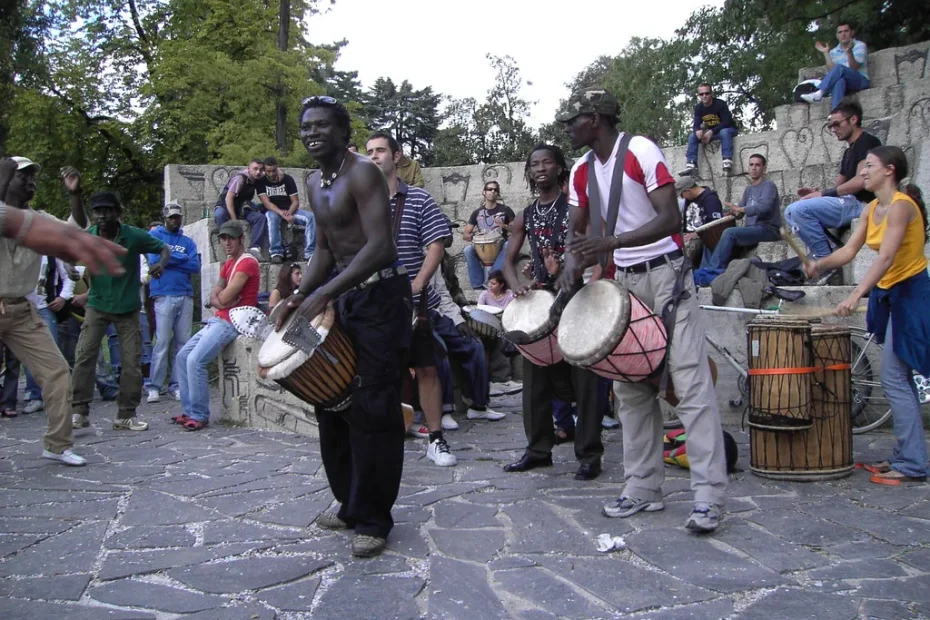
Welcome to the fascinating world of the djembe, a musical instrument with a rich history deeply rooted in African culture. Originating in West Africa, the djembe is a symbol of African tradition and African percussion. For centuries, communities in Mali, Guinea, Senegal and Côte d’Ivoire have used it to celebrate, communicate and express African culture. The djembe is much more than a musical instrument: it is an African drum that brings African rhythms to life and resonates with the richness of African culture. Join us on a journey through the djembe’s history and discover the origins, tradition and captivating rhythms of this iconic West African instrument.
The origins of the djembe
The djembe originated more than 700 years ago in West Africa, primarily in the Mandinka Empire, which covered a vast region including Mali, Guinea, Senegal and Côte d’Ivoire. Archaeological research suggests that various peoples of the empire, including the Malinke, Wassoulounke, Soninke, Khassonke and Bambara, adopted the djembe, then made from a repurposed mortar, as a musical instrument.
The exact origin of the name “djembe” is still debated, but it is chiefly associated with Bambara and Soninke expressions meaning “everyone gathers together” and “drum,” respectively.
The djembe holds a central place in African culture and symbolizes the fundamental elements of the universe.
This percussion instrument has evolved over time, moving from local traditions to a worldwide presence through its export and the growing popularity of African music.
African peoples and the invention of the djembe
The Mandinka people played a major role in the invention and popularization of the djembe. Within the empire, various peoples contributed to the creation of this musical instrument. The Malinke, Wassoulounke, Soninke, Khassonke and Bambara all brought their skills to the transformation of a mortar into a djembe.
| People | Contribution |
|---|---|
| Malinke | Making the djembe’s body from a grain mortar |
| Wassoulounke | Adding tension ropes to improve the sound |
| Soninke | Using goatskin for the drumhead |
| Khassonke | Developing specific striking techniques to produce different sounds |
| Bambara | Incorporating the djembe into cultural and ceremonial practices |
Through the combined contributions of these peoples, the djembe became a versatile musical instrument suited to a wide variety of rhythms and styles.
How the djembe has evolved over the years
In recent decades, the djembe has undergone remarkable changes. Its spread beyond Africa began in the 1950s thanks to African ballet companies and the efforts of figures such as Fodéba Keïta. In the 1980s, djembe masters from national ballet companies, including Mamady Keïta, Famoudou Konaté and Adama Dramé, played a key role in introducing the instrument around the world.
The djembe has also found a place in modern music, blending with styles such as pop rock and Afro-rock. Djembe percussionists have become ambassadors for African music, inspiring generations of musicians with their captivating performances and virtuosic rhythms. Today, the djembe continues to cross cultural boundaries and move music lovers around the world.
“The djembe is a powerful voice that resonates around the world. It allows percussionists to express themselves and share the richness of African rhythms with an international audience.” — Mamady Keïta
The djembe’s transformation has extended beyond its use in different musical cultures. The instrument has also evolved in its construction, playing techniques and worldwide recognition. Djembe masters have refined their art and passed their knowledge to later generations, establishing djembe schools around the world. Thanks to their influence and dedication, the djembe has become a respected and appreciated instrument in the world of African percussion.
The djembe’s evolution has opened up new rhythms and expanded the possibilities for musical creativity. Percussionists around the world study African rhythms and draw on them to incorporate elements of djembe playing into their own compositions. The world of the djembe continues to grow, driven by new talent and collaborations across continents that extend the reach of traditional African music.
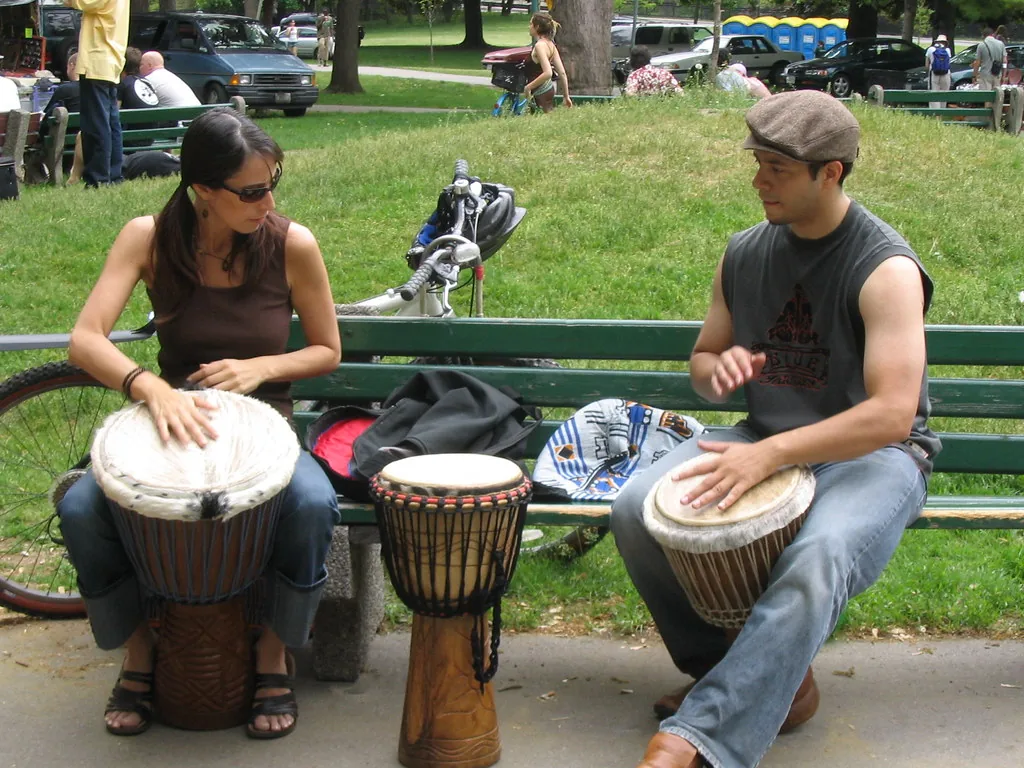
African percussion has long been a means of communication and expression, and the djembe is one of its most vibrant examples. Its journey over the years has shown its ability to adapt and renew itself while retaining its African essence and heritage. In West African villages and on the stages of major international festivals alike, the djembe’s mesmerizing rhythm resonates with listeners and celebrates the richness of African music.
Table: how the djembe has evolved over the years
| Period | Events |
|---|---|
| 1950-1960 | The djembe begins to spread beyond Africa through African ballet companies |
| 1980-1990 | The djembe spreads worldwide through djembe masters from national ballet companies |
| Since 2010 | The djembe enters modern musical settings, and new collaborations across continents emerge |
The djembe: a versatile musical instrument
The djembe is a versatile musical instrument with an exceptionally rich range of sounds. Percussionists, known as “djembefolas,” master various striking techniques and use their hands, fingers and palms to create different sounds. The sounds produced by a djembe vary with the tension of its drumhead, the materials used and the playing technique.
From lively, driving rhythms to deep, meditative ones, the djembe offers great musical expressiveness. It is used in a wide variety of musical styles, from traditional African music to modern genres such as pop rock and Afro-rock. The djembe invites dancing and celebration, allowing percussionists to express themselves freely and communicate with others through the universal language of music.
But how does the djembe produce such a variety of sounds? The answer lies in a combination of factors, including the size and shape of its resonating body, the quality of its drumhead and the different striking techniques used. Percussionists can use their fingertips to produce clear, high-pitched sounds, their palms for deeper sounds, and rapidly moving fingers to create complex rhythmic effects.
Players can also vary their striking techniques by adjusting the force and angle of each stroke, enabling them to play varied rhythms and explore different tones. Some percussionists also use sticks or small straps to create specific sound effects.
Djembe striking techniques
Here are some of the most common striking techniques used by djembe percussionists:
- Tone: a stroke in the center of the drumhead that produces a clear, powerful sound.
- Slap: a rebounding stroke using the palm to produce a sharp, percussive sound.
- Bass: a stroke at the edge of the drumhead using the palm to produce a low, deep sound.
- Pop: a stroke using rapidly moving fingers to produce a short, percussive sound.
These techniques can be combined and varied to create an endless range of sounds and rhythms. Djembe percussionists develop their own styles and approaches, making every performance unique and captivating.
Examples of rhythms played on the djembe
Here are some examples of rhythms played on the djembe:
| Rhythm | Description |
|---|---|
| Djembe Mendiani | A traditional Mandinka rhythm played at wedding ceremonies. |
| Dundunba | A rhythm played at initiation ceremonies and community celebrations. |
| Kuku | An energetic, cheerful rhythm often played at village celebrations. |
| Tiriba | A rhythm originating in Guinea and played at funerals. |
These rhythms are just a few examples among countless possibilities. Every region, people and community has its own rhythms, passing on African history and culture through music.
The djembe’s versatility makes it popular around the world. Fans of traditional African music, professional percussionists and musicians working in more modern styles all appreciate its ability to create distinctive, compelling sounds.
Conclusion
The djembe is much more than an African drum. It is a musical instrument that embodies African culture, communication and tradition. Deeply rooted in West Africa, the djembe has evolved over the centuries into a versatile instrument that resonates around the world.
The djembe’s captivating rhythms and distinctive sounds engage listeners and invite dancing and celebration. In African communities, onstage and in modern musical settings, the djembe continues to fascinate and inspire musicians and music lovers around the world.
This journey through its African history reveals the passion, creativity and depth of this iconic percussion instrument. Explore the djembe’s mesmerizing rhythms and let yourself be carried away by the African rhythms that still resonate today.
African music offers a journey into the heart of a vibrant, diverse culture, and the djembe is a gateway to that extraordinary experience.
FAQ
Where does the djembe come from?
The djembe comes from West Africa, particularly Mali, Guinea, Senegal and Côte d’Ivoire. It has its roots in African tradition and is deeply embedded in the cultures of these regions.
How did the djembe originate?
The djembe was invented more than 700 years ago in West Africa, primarily in the Mandinka Empire. Different peoples of the empire transformed a repurposed mortar into a musical instrument.
What role does the djembe play in African culture?
The djembe plays a central role in the daily lives of African communities. It is used at ceremonies, weddings, funerals and gatherings, symbolizing connection, celebration and sharing within communities.
How has the djembe evolved over the years?
The djembe has undergone a remarkable evolution, moving from local traditions to a worldwide presence through its export and the growing popularity of African music. Djembe masters have played a key role in its spread around the world.
What sounds and rhythms can the djembe produce?
The djembe offers an exceptionally rich range of sounds. Percussionists use different striking techniques to create sounds and rhythms ranging from lively and driving to deep and meditative. It allows for great musical expressiveness.
Why is the djembe important in African culture?
The djembe embodies African culture, communication and tradition. This percussion instrument crosses cultural boundaries and continues to fascinate and inspire musicians and music lovers around the world.