
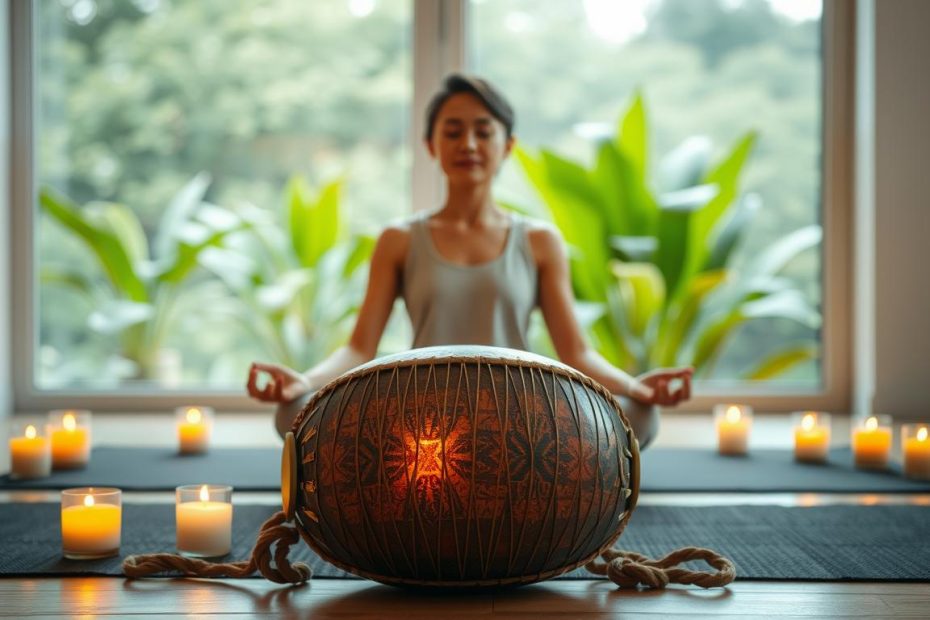
This article offers a practical guide to pairing a simple instrument with contemplative listening. The aim is to create an experience you can repeat every day, whether you are a beginner or a more experienced practitioner.
The music used in this practice is not entertainment: it invites you to turn inward. You will learn how harmonious, accurately tuned, ready-to-play sounds can promote calm, reduce stress and improve sleep quality.
A comfortable volume (70 to 80 dB) and no need for tuning make the instrument easy to use. This guide offers a step-by-step method, scripts, rhythmic cues and setup tips to transform your routine.
Start today with short, regular rituals and observe their cumulative benefits in daily life. To choose a practical, complete model, see the recommended product: 8-Note Tank Drum.
Why pair the tongue drum with meditation today?
Musical meditation is based on contemplative listening, distinct from listening for entertainment. It prioritizes intention and presence over passive enjoyment. Using a simple instrument encourages a regular, manageable practice.
The tongue drum suits this approach because its notes are accurately tuned and it does not need tuning. These features reduce mental effort and free the mind. Its sounds and vibrations provide an anchor for returning to the present moment.
Physiologically, the practice influences the endocrine system associated with stress and encourages the emergence of alpha and theta waves. Studies show that slow rhythms are relaxing, while faster tempos improve concentration.
To begin, set an intention, breathe deeply and repeat a simple sequence of notes. Even without musical skills, this method can quickly benefit the body and support a meditative state.
To explore this sound-based approach further and discover complementary tools, consult a practical resource on instruments and techniques.
The tongue drum: a percussion instrument with soothing sounds
This steel tongue instrument produces gentle harmonics that surround the listener without sounding harsh. Its volume remains moderate (around 70 to 80 dB), making it suitable for indoor practice.
Sounds, vibrations and the nervous system
Stable frequencies and regular vibrations reduce stress-related reactivity. Studies show a drop in cortisol after attentive listening (PLOS One, 2013).
In addition, a study published in Acta Medica Lituanica (2018) highlights an increase in theta brain waves, which supports deep relaxation.
Easy to use for beginners
The notes are accurately tuned straight out of the box; no tuning or complex maintenance is needed. A gentle touch is enough to produce harmonious sounds that help you refocus.
Practical guidelines
- Diameters of at least 30 cm: deeper bass notes and vibrations that are easier to feel in the body.
- Slow rhythms for relaxation, livelier tempos to support concentration (University of Nevada).
- 432 Hz tuning: an option often sought for relaxation, though it is not essential.
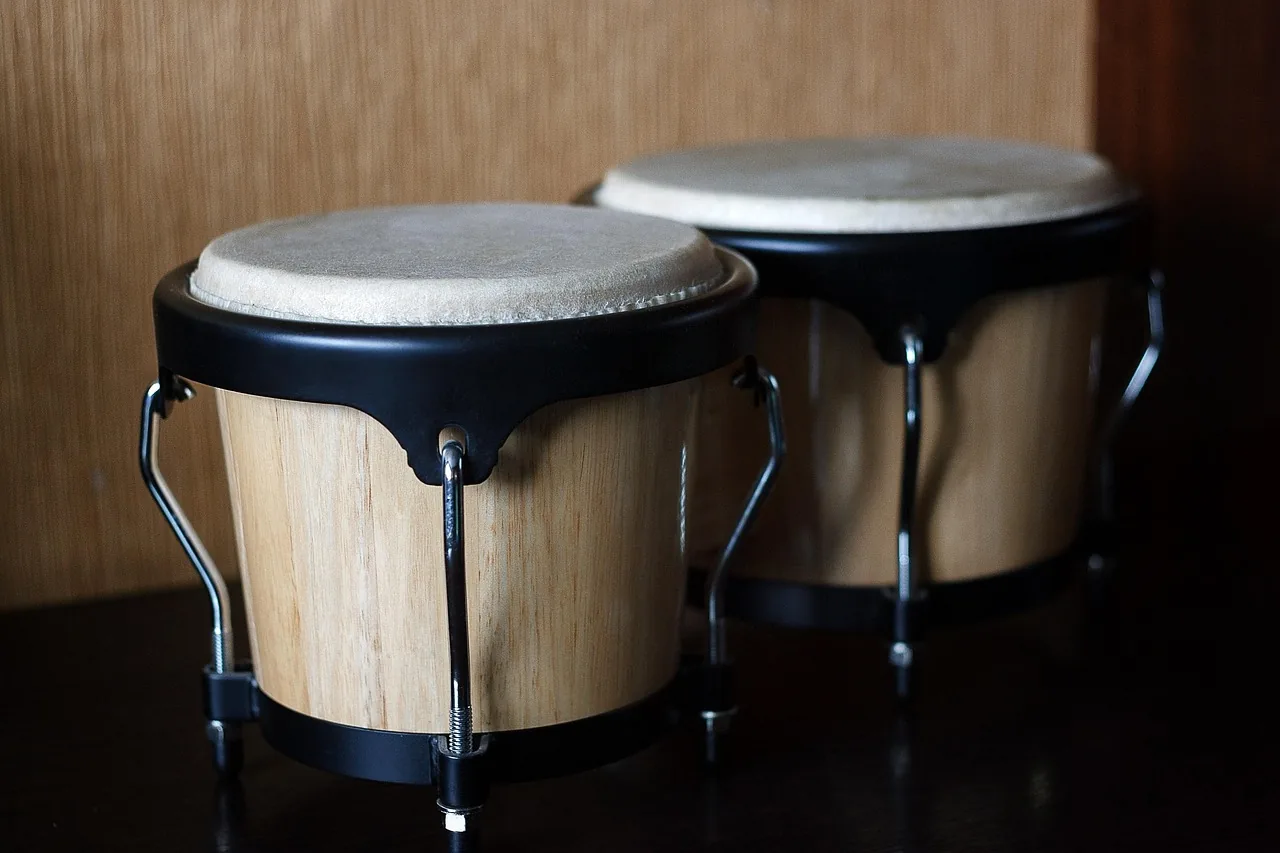
In short, this percussion instrument combines simplicity with a consistent sound. A few repeated notes are enough to create a steady soundscape that gently helps regulate the nervous system.
Prepare your space, body and mind for a successful session
Setting up a dedicated space greatly improves the quality of each session. Start with the three Cs: comfort, calm and concentration. A mat or cushion provides a comfortable seat. Remove distractions and, if needed, turn on a quiet metronome to guide your attention.
Create the right atmosphere with the three Cs
Comfort: a stable posture and a pleasant temperature. Calm: put your phone in airplane mode and dim the lights. Concentration: a subtle sound cue helps without taking over the space.
Position and placement of the instrument
Rest the instrument on your lap when sitting cross-legged, or place it on a stable surface with protective pads. Larger models produce vibrations that are easier to feel in the body.
Guided breathing as an anchor
Synchronize 4-7-8 breathing with gentle strikes: inhale for 4 counts, hold your breath for 7 counts, then exhale for 8 counts. This coordination steadies your inner state and makes it easier to relax.
- Start with sessions of 5 to 10 minutes and prioritize consistency.
- Choose a pentatonic scale to avoid dissonance.
- Strike gently and let each note fade away.
- Finish with three deep breaths and note how you feel.
To enrich your sound-based approach, explore resources on instruments and techniques.
Tongue drum and guided meditation: step-by-step instructions
Begin each session with a simple routine that gives structure to your time and intention. This guide offers a short session you can repeat: 5 minutes of warm-up, 10 minutes of playing and 3 to 5 minutes of winding down.
Length and structure of a typical session
Warm-up (3 to 5 min): practice 4-7-8 breathing, do a quick body scan and gently play 2 to 3 low notes to settle your attention.
Main practice (8 to 12 min): play intuitively in a simple scale. Repeat a pattern of 3 to 4 notes. Adjust the tempo to suit your relaxation goal.
Wind-down (3 to 5 min): slow down, return to a single sustained note, take three deep breaths, then sit in silence for 30 seconds to absorb the meditative state.
A practical script and how to play each note
First, invite participants to set an intention. Guide their breathing. Suggest repeating a short mantra quietly while lightly touching each chosen note.
Here is a simple pattern to repeat: low, middle, high, middle. On a diatonic scale, leave out F and B to create a harmonious pentatonic scale.
Points of focus and mistakes to avoid
- Focus on the feeling of vibration beneath your hands, your breathing or a visualization of light.
- If your mind wanders, return to one note and your breathing for 30 to 60 seconds, then gradually expand your playing again.
- Avoid striking too hard, playing too many notes in succession or making your first sessions too long.
Rate your stress on a scale from 0 to 10 before and after the session to adjust its length and techniques. Limit sessions to 20 minutes at first, then gradually increase their length.
Rhythms, notes and playing techniques for relaxation and concentration
Your choice of rhythm directly affects the state you want to achieve. Aim for 40 to 60 BPM for physical and mental relaxation. To stimulate creativity and concentration, move to a tempo of 90 to 110 BPM.
Build a pattern: create a loop of 3 to 4 notes with regular strikes. Let each sound ring out: a steady sound texture makes sustained attention easier and supports the emergence of theta brain waves (4 to 8 Hz).
Mantras, visualizations and progression
Synchronize a short syllable with each strike to anchor your attention. Associate the lowest note with the lower body, then move toward higher notes while imagining a rising light.
Pentatonic scales and simplicity
Favor a pentatonic scale to avoid dissonance. You can also try playing just one note for 60 to 90 seconds if your concentration fades.
“Two slow minutes, two slightly livelier minutes, then a slow finish: simple and effective.”
For more advice on bringing rhythm into a group, read this article: ensemble techniques and rhythm.
Choose the right instrument and useful accessories
A good instrument has clear harmonics and an even sound decay. These qualities help you compare models before buying.
Number of notes, diameter and materials
Number of notes: 6 to 11 notes offer a good balance between variety and simplicity. They make meditative playing easier without overloading you with choices.
Diameter: models at least 30 cm across produce stronger low notes and vibrations you can feel in the body. Consider compact versions as well.
Materials: steel offers clear, lasting resonance; carbon is lighter and more durable for some uses.
Tuning, budget and essential accessories
Tuning: 432 Hz is often chosen for relaxation; 440 Hz works well if you play with other instruments.
- Budget: €150 to €300 for a solid starter instrument; €400 to €600 for professional finishes.
- Accessories: silicone or felt mallets, a protective case, a metronome and finger rings.
- Ergonomics: check note placement, protective pads and the instrument’s stability on your lap.
“Listen to how long each note rings and how it fades: that is often the best test.”
Make the practice part of daily life
Adding a short sound session to your day can produce quick results. Brief, regular practice improves sleep quality and reduces stress.
Short, effective sessions
- Morning (5 to 7 min): slow breathing and 2 to 3 low notes for a gentle start to the day.
- Midday (3 to 5 min): repeat a single note to clear your mind.
- Evening (7 to 10 min): alternate slow patterns to release stress.
Combine playing with movement
Add simple, gentle yoga poses or a body scan. Coordinate your breathing with the strikes to strengthen the effect.
Keeping a practice journal helps you track positive effects: duration, favorite notes, sleep and sensations.
| Time | Duration | Goal | Tip |
|---|---|---|---|
| Morning | 5 to 7 min | Gentle awakening | 2 to 3 low notes |
| Midday | 3 to 5 min | Renewed concentration | One repeated note |
| Evening | 7 to 10 min | Unwinding | Slow patterns and breathing |
To explore this sound-based approach further, consult a practical resource on sound therapy. Sharing the practice with a group encourages commitment and consistency.
Conclusion
A few well-chosen notes are enough to cultivate a calmer state of mind.
This article shows how a simple sound practice can encourage relaxation, reduce stress and improve concentration.
Scientific findings indicate lower cortisol levels and changes in brain waves after attentive listening. This complete guide provides scripts, BPM tempo guidelines and equipment advice you can use immediately.
Limit the scale, repeat a pattern and let the sounds and vibrations affect your body and mind. Practice for a few minutes each day: consistency has a stronger positive effect than an occasional long session.
Choose a suitable model, try 432 Hz and 440 Hz tunings, then adapt the way you play. Using a tongue drum helps sustain awareness and lasting relaxation.
Thank you for your commitment: return to this complete guide to refine your techniques step by step and track the benefits of your practice.