
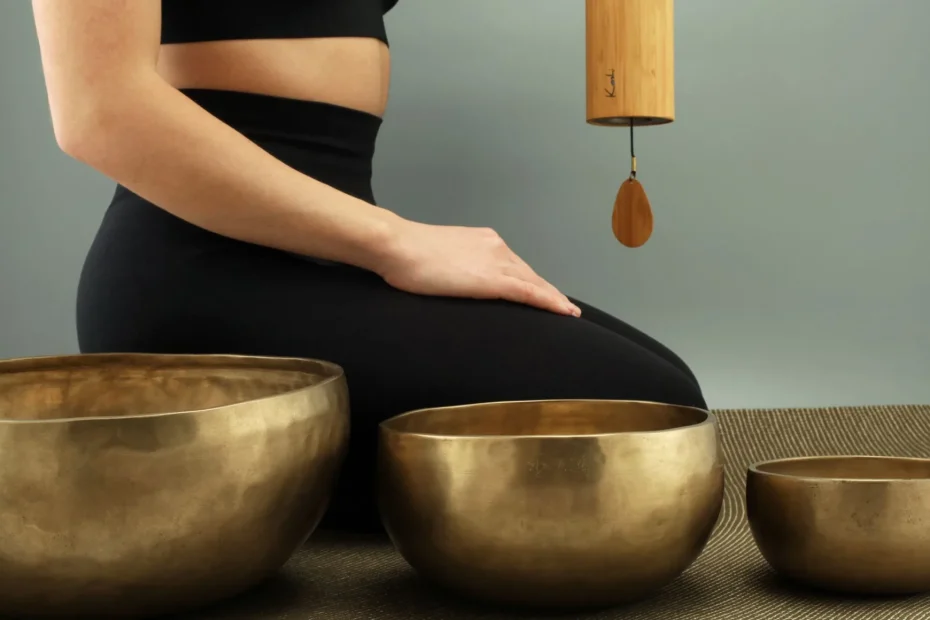
Today, singing bowls are used during meditation and relaxation sessions. Their deep voice invites us to slow down, while a mallet produces sounds that change with the way it is moved. Each instrument has a distinct presence. Their uses are well documented, but their past is much less so.
A popular theory places the emergence of these bowls in Mongolia more than 5,000 years ago. Historical sources do not confirm this date, however. The earliest written references to the term “Tibetan bowl” date from the 1970s. To learn more about the singing bowl, it is therefore important to distinguish established facts from stories passed down over time.
Handcrafting, working the metal by hand and finishing give these bowls their character. Some accounts attribute special properties to the seven-metal alloy, although there is no established scientific evidence for these benefits. Today, their use extends far beyond Tibet and the Himalayas.
This article explores the object’s origins and symbolism, the legend of the seven metals and the modern arrival of quartz crystal bowls. It also examines their place in everyday life without confusing beliefs with verified facts.
Tibetan singing bowls: history, origins and meaning
Accounts of their past combine traditions, comparisons of sounds and a few surviving documents. To separate legend from verifiable facts, we need to examine the available dates.
An ancient origin often mentioned but difficult to confirm
According to one legend, these vessels appeared in Mongolia 5,000 years ago. Nomadic blacksmiths supposedly shaped copper, and shamans then used the bowls in rituals. The story goes on to describe their journey to Tibet, Nepal, India and then China. Yet no evidence confirms this origin or the existence of this ancient alloy.
The first written references and the instrument’s spread
Perceval London studied Tibetan music in 1903 and 1904 without reporting any singing bowls. In 1988, Daniel Scheidegger likewise described no identifiable instrument of this kind in his book on ritual music.
The instrument’s modern spread gained momentum in 1972 with Nancy Hennings and Henry Wolff’s album Tibetan Bells. Its title does not establish the origin of the sounds. Keep this distinction in mind when exploring the account of these bowls’ origins. The Japanese rin, also called dobachi, resembles the Chinese nao in its shape and ritual use. That resemblance does not prove a direct lineage.
| Date | What is known | What we can conclude |
|---|---|---|
| 5,000 years ago | A date given in a legend | No historical evidence establishes it |
| 1903–1904 | London studies Tibetan music | He does not mention this instrument |
| 1972 | Release of Tibetan Bells | A milestone in its modern spread |
What place do singing bowls have in Buddhist traditions?
Tradition sometimes associates Tibetan bowls with the practices of Buddhist monks. To put these accounts in context, the Bön religion predates Buddhism in Tibet, where Buddhism became predominant from the 8th century onward. None of the written records cited, however, confirms that these bowls were used in ancient Tibetan rituals.
Their use in rituals and meditation
In meditation, a singing bowl can provide a sound to focus on. Attention rests on its tones, then returns to the breath. This is a personal experience: it does not prove a therapeutic effect on the body or chakras. You can also read what a singing bowl is.
A sound can support attention without replacing medical care.
- Tibetan bowls and singing bowls are associated with reported meditative uses.
- In Japan, the rin, or dobachi, is used in some rituals. This large instrument can exceed one metre in diameter.
The use of bowls in ritual music varies among traditions. Some accounts mention monks, but the available evidence cannot establish how long Buddhist monks have practised this. The vibrations may accompany a quiet moment; the name “Tibetan singing bowl” alone does not confirm an origin.
Handcrafting and the composition of Tibetan bowls
The way metal is worked affects each bowl’s texture, shape and sound. Handmade Tibetan bowls may therefore differ slightly, even when they come from the same workshop.
Hand hammering and each bowl’s distinctive sound
Artisans strike the metal for many hours. This patient hammering leaves visible marks on the surface. It also shapes each instrument’s distinctive sound. When choosing a singing bowl, look at the consistency of the hammer marks and the finish, then listen to how it responds to a mallet. Quality does not depend on a single factor: craftsmanship, materials and listening all matter.
The legend of the seven metals and analyses of ancient alloys
Tradition links seven metals to celestial bodies: copper to Venus, tin to Jupiter, iron to Mars, mercury to Mercury, silver to the Moon, lead to Saturn and gold to the Sun. These associations are symbolic beliefs, not a guaranteed recipe. Explore the legend of the seven metals.
Analysis of more than 100 old pieces, however, shows that most are made of bronze, an alloy of copper and tin, sometimes with a little iron. Another source estimates that some bowls contain about 70% copper and 29% tin. These differences suggest examining each piece instead of relying on a single recipe.
How does a Tibetan bowl produce sounds and vibrations?
A simple movement turns silence into resonance. Striking a Tibetan bowl produces a brief sound, while rubbing its rim creates a sustained note.

To make the instrument sing, move the mallet around its rim without pressing too hard. The bowl’s size, the way you hold it and the speed of the movement all change the result. A suitable mallet helps you maintain a steady motion. This guide to using a singing bowl offers practical advice.
Vibrations in the metal produce sounds that vary depending on whether the bowl is struck or rubbed. When there is water in the bowl, they can also produce bubbles or visible patterns. This phenomenon is called cymatics. Physical sensations vary from person to person; they do not prove a measurable medical effect. Crystal bowls are made by a different process.
| Action | Sound produced | What you may observe |
|---|---|---|
| Strike the rim | A brief sound with varying resonance | The force of the strike changes the sound |
| Rub the rim | A continuous sound if the movement stays steady | The bowl’s size affects its resonance |
| Make the water vibrate | Sound accompanied by movement in the water | Bubbles or patterns may appear |
Using a singing bowl for meditation and relaxation
A few minutes of listening can provide a peaceful break during the day. Tibetan bowls are now used as sound cues during meditation. No musical experience is needed to use one.
Striking or singing the bowl with a mallet
For a brief sound, gently strike the rim with a mallet suited to the instrument’s size. Try a light touch, then listen to the variations. To make a singing bowl sing, rest it on an open palm without gripping its sides. Move the mallet steadily around the outside of the rim. This method helps you explore its sounds without forcing them.
Sound therapy: reported uses, not proof of healing
In sound therapy, vibrations sometimes accompany relaxation or practices associated with chakras. Sensations differ from person to person. The available sources provide neither numerical clinical results nor a protocol proving healing. Treat singing bowls as a tool for well-being, never as a substitute for care. For practical advice, consult this guide to using a singing bowl.
| Action | Desired effect | Tip |
|---|---|---|
| Strike gently | A brief sound | Choose a suitable mallet |
| Rub the rim | A sustained tone | Keep your palm open |
From metal bowls to quartz crystal singing bowls
Metal bowls are associated with ancient traditions, even though their past remains difficult to establish. A metal Tibetan bowl therefore does not share the same origins as quartz crystal models. The latter appeared in modern times and are made by a different process.
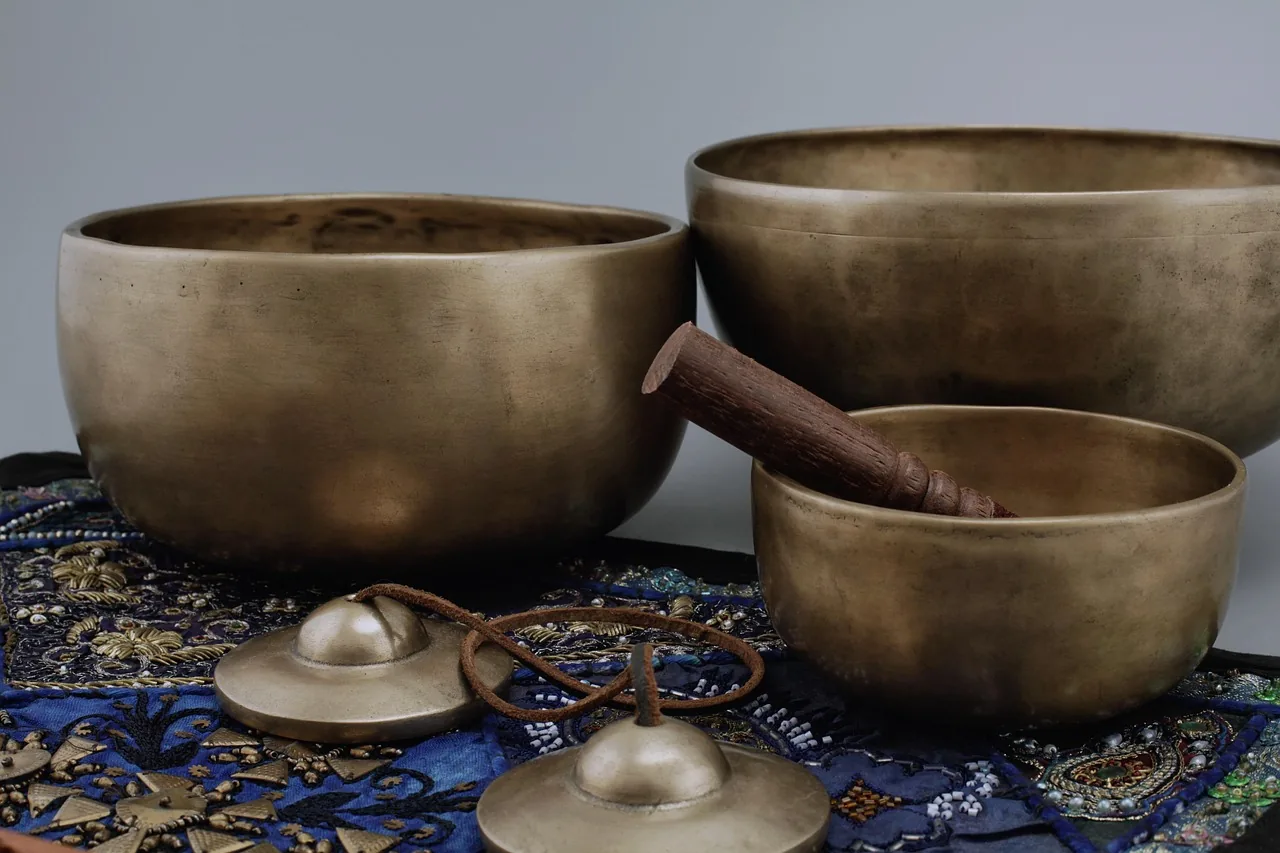
A modern development with separate origins
In the 20th century, Saint-Gobain patented a process for turning quartz powder into a solid material. The first crystal bowls intended for therapeutic use appeared from the 1980s onward. The powder is melted at temperatures of several thousand degrees and then shaped into the desired form.
This industrial method differs from artisans’ metalworking. It produces an object appreciated for the precision of its note. In music or during a relaxation session, crystal produces a clear, stable sound. That does not give it the same age as metal bowls.
To compare these instruments more closely, consult our guide to the differences between metal models and crystal models. Your choice depends on the sound you want, the quality of manufacture and how you plan to use the bowl.
Conclusion
The theory that these bowls originated in Mongolia 5,000 years ago remains uncertain: the written records cited do not confirm it. The legend of the seven metals also contrasts with analyses of more than 100 old pieces, made mainly of copper and tin.
Today, Tibetan bowls accompany meditation and relaxation. A singing bowl can help focus attention without proving the benefits claimed in sound therapy or an effect on chakras. Anyone can simply enjoy its resonance in everyday life.
Metal models differ from crystal bowls, which appeared in a therapeutic context from the 1980s onward. When choosing one, listen to its sound, examine its materials and consider its historical context. An informed view helps us appreciate these bowls without confusing tradition, stories and evidence.