
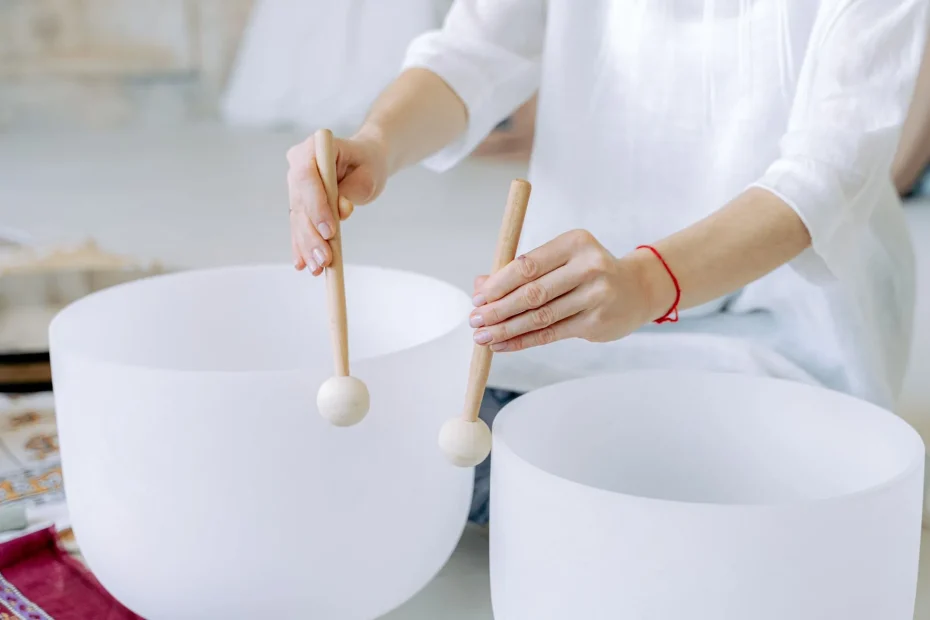
A singing instrument can accompany a break, a meditation session, or a quiet moment before sleep. Its effect is personal: it offers no guaranteed result. Listening and your preferences should guide your choice of sound above all.
The diatonic scale has seven notes: C, D, E, F, G, A, and B. This variety helps you compare the pitches of singing bowls. In 1975, the International Organization for Standardization (ISO) set the reference pitch for A at 440 Hz. With that reference, C corresponds to 261.626 Hz. Frequency therefore contributes to whether a note sounds lower or higher.
Pitch varies partly with the bowl’s size and shape. Sound can be produced by striking or rubbing it, sometimes with two alternating notes. To better understand these characteristics, see our guide to singing bowls.
In this article, we’ll look at how to choose a sound for different uses, from rest to meditation. Links between notes and chakras belong to traditions and have no medical proof. How a sound feels to you remains the best guide to finding one that suits you.
Tibetan singing bowl music: what sound atmosphere should you choose?
Before exploring the notes, think about when you will listen to this instrument. Meditation, yoga, and listening at home are common uses in several Himalayan regions. Your listening space and preferences matter more than any fixed rule.
Decide how you will use it before choosing sounds
A singing bowl used for a guided practice has different requirements from one kept at home. Some singing bowls produce low sounds that people often enjoy during a relaxing break. Higher notes may feel energizing, but everyone’s listening experience is personal.
- For meditation, favor a sound that supports your attention.
- For yoga, consider weight and portability.
- At home, take the volume and listening time into account.
Choose a sound atmosphere suited to your surroundings
The size, shape, and number of instruments affect the space they occupy and how they sound. A Tibetan singing bowl can be played by hand or with a mallet. Tibetan bowls are part of traditions in Tibet, Nepal, Bhutan, and Ladakh. This cultural context helps explain their use without dictating your criteria. Frequency and symbols associated with chakras do not guarantee any effect on the body. To choose a bowl, listen to a few sounds in a quiet place and keep the one that suits you.
Understand a singing bowl’s distinctive sound
One instrument can reveal several layers of sound. Their balance gives each bowl a character that the ear quickly notices.
The fundamental note and harmonics
The fundamental is often the lowest and strongest note. Quieter harmonics enrich the sound. On average, the frequency of the first major harmonic is 2.89 times that of the fundamental, and the second is 5.48 times as high. These values vary: measuring each peak helps identify the notes accurately.
A Tibetan singing bowl can therefore produce several pitches at once. The spectrum of a 16 cm bowl provides one example, but the result changes with the playing technique. Singing bowls do not all have the same sound signature.
Timbre, resonance, and beats
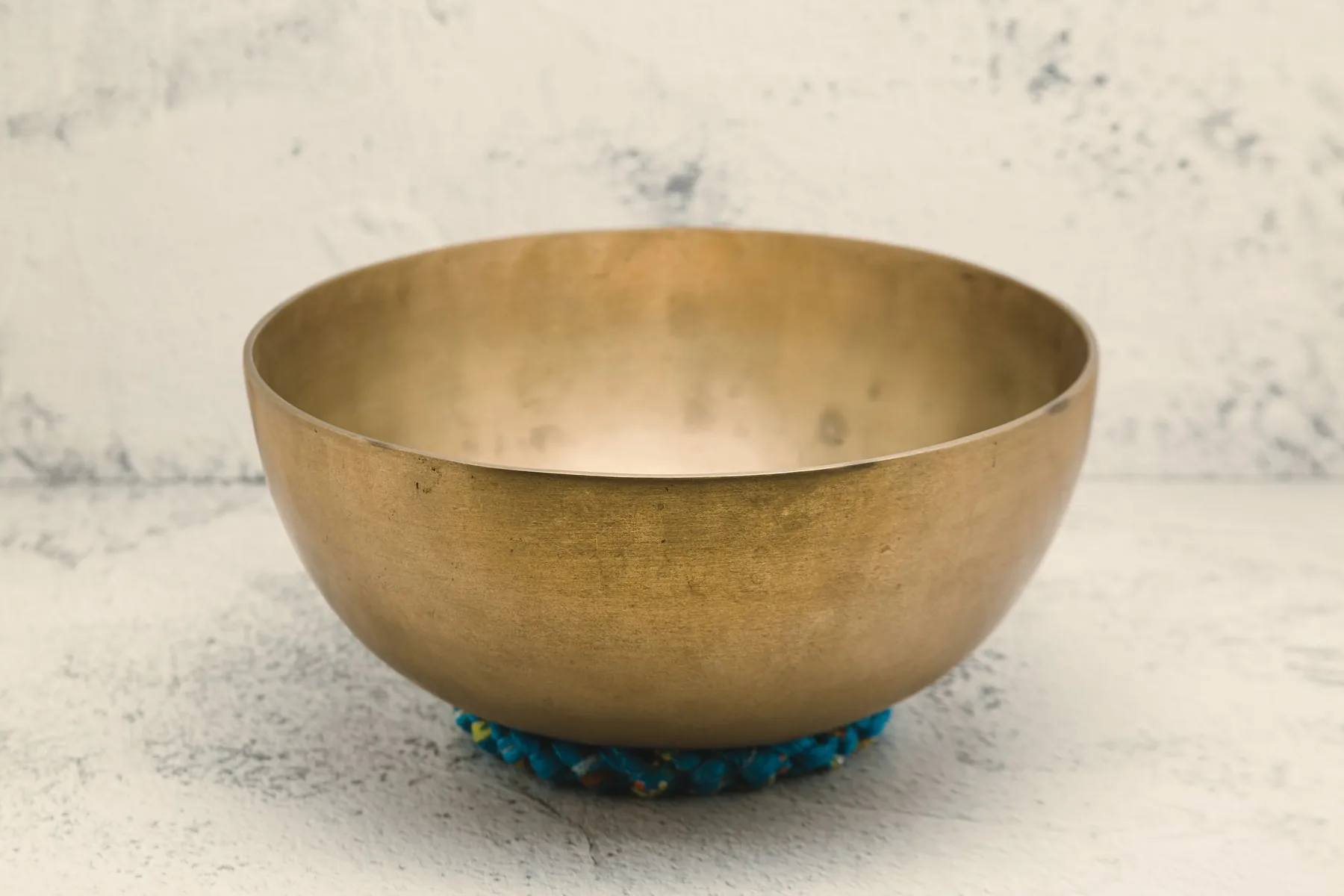
Timbre varies with materials and alloys: some bowls sound more metallic, while others have a warmer sound, such as antique Jambati bowls. “Sustain” is the length of time the notes remain audible. Your hand, striking, and rubbing also change the vibrations. To explore listening further, read these resources on listening and relaxation.
| Element | Acoustic guide | What it reveals |
|---|---|---|
| Fundamental | Often the lowest and strongest note | The basis of the sound |
| First major harmonic | About 2.89 times the fundamental frequency | An additional pitch |
| Sustain | How long the notes remain audible | How long the sound persists |
Choose a sound atmosphere for meditation
A steady rhythm can give your attention a point of focus during a session. Singing bowls are sometimes used for meditation or yoga, but everyone can adapt their use to their own habits. Pay attention to what you hear instead of expecting a specific result.
Use regular sounds to support concentration
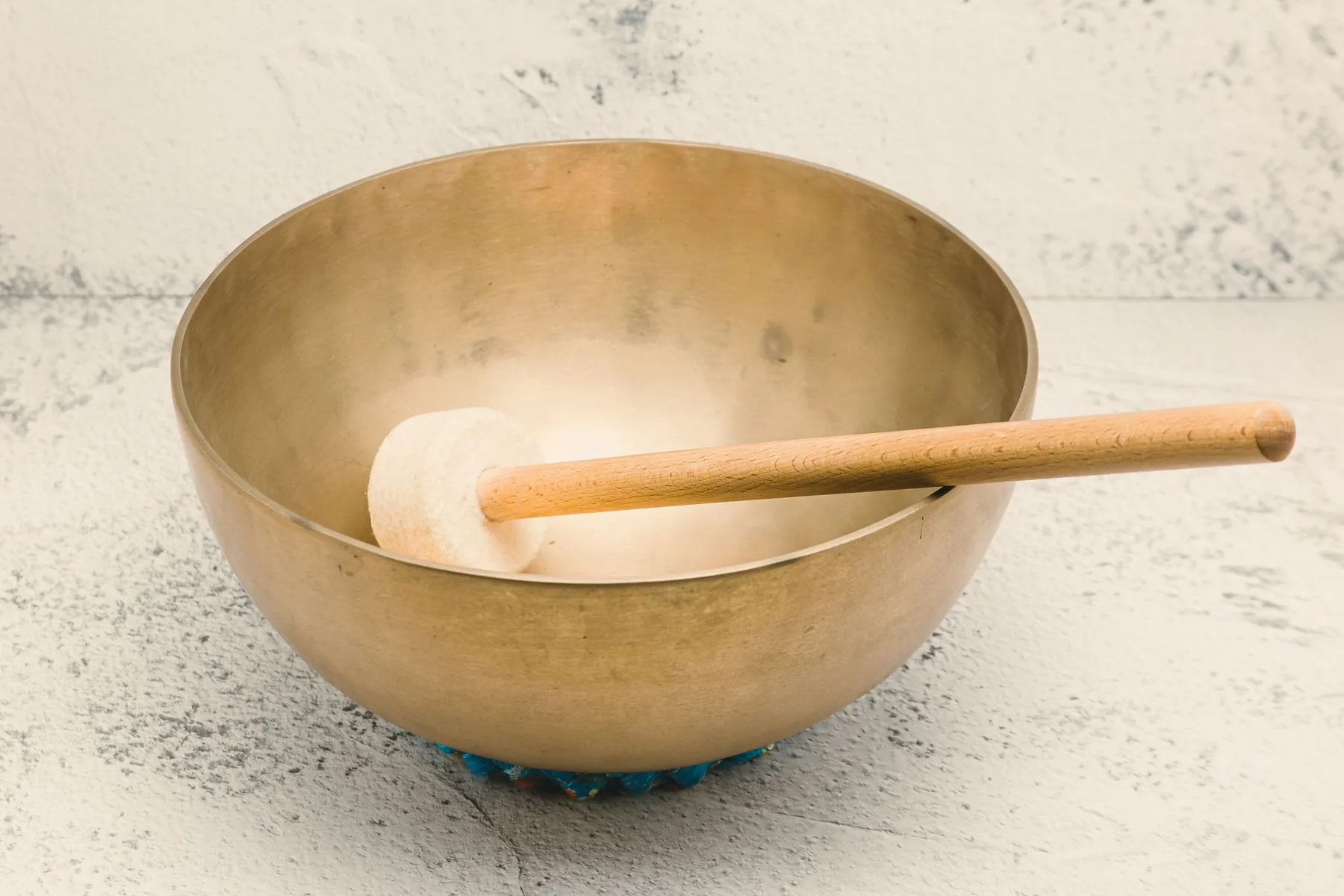
Try a Tibetan singing bowl for a few minutes, then notice whether its sound helps you stay present. A large felt beater brings out lower sounds. A firm mallet or stick emphasizes higher notes. Your technique changes the balance you hear without changing the instrument’s natural frequency.
- Compare the pitches and vibrations at a moderate volume.
- Adjust listening time and volume for your comfort.
- Choose a bowl according to how it feels to you, without linking every note to a chakra or a health promise.
Music can provide a point of focus, but its effect varies from person to person. A pleasant vibration does not necessarily mean more energy or less stress. It guarantees no benefit to the body or health.
“A few minutes of listening are enough to compare sounds and see what holds your attention.”
Create a relaxing atmosphere to ease stress
A simple ritual can turn a few minutes of listening into an attentive break. Settle into a quiet place, then try a singing bowl, leaving time between strikes. You can also move the mallet along the rim: after a few moments, a sustained sound develops.
Sounds and vibrations sometimes accompany relaxation or music therapy practices. This does not prove that they reduce stress or produce a medical effect. Enjoying a sound does not guarantee any benefit to the body or health. To learn more, see these resources on sound.
- Compare a low note with a higher one, then notice their timbre and shape.
- Keep the volume moderate and listen for a length of time that suits you. Try several singing bowls without expecting the same response from everyone.
- Links between chakras and energy belong to a spiritual tradition, not a medical diagnosis.
During meditation, choose the vibration you find pleasant. This use is personal: bowls promise no specific effect on the body.
Encourage a calm atmosphere at bedtime
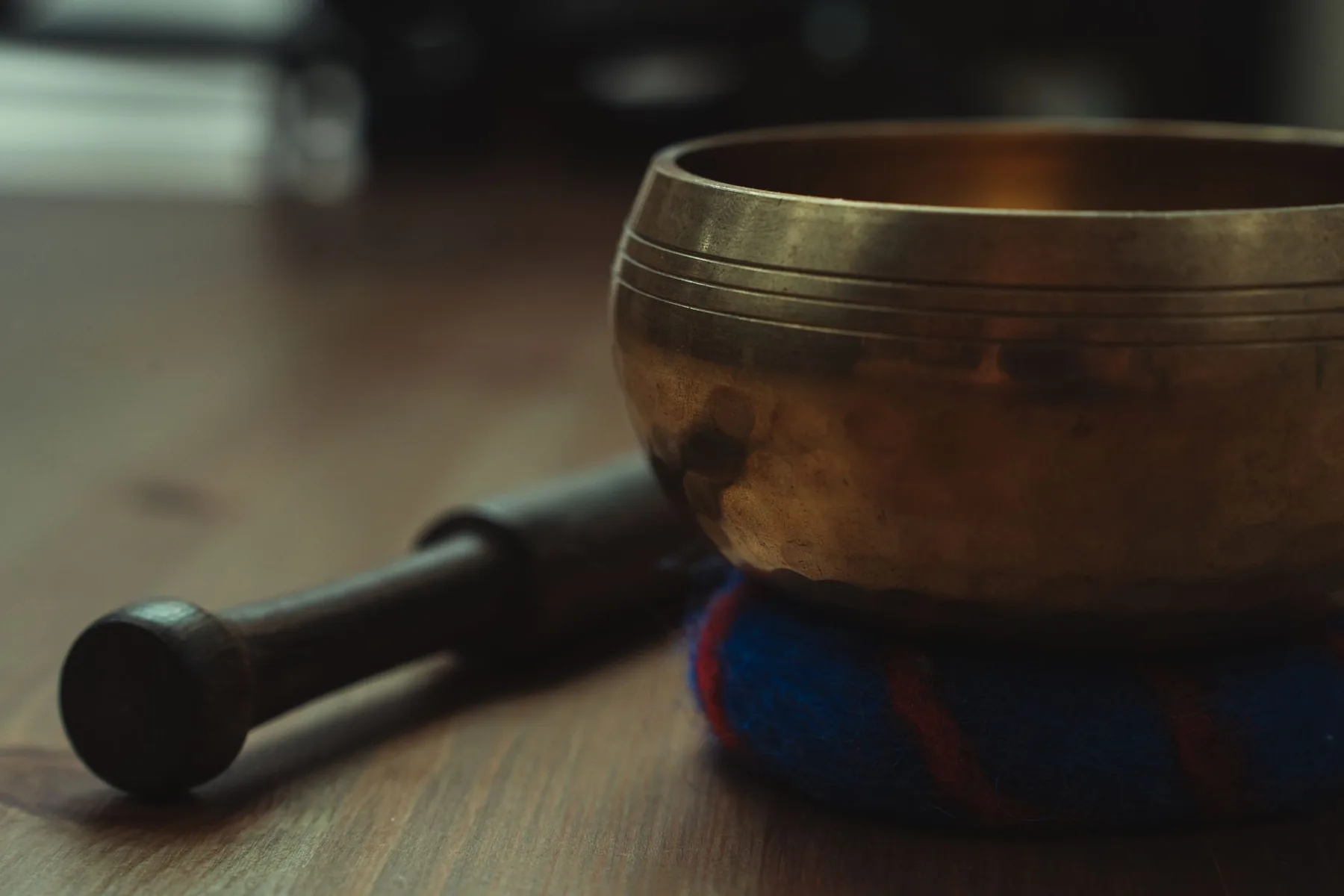
At bedtime, choose gentle, brief listening. Set the volume for your comfort without expecting a guaranteed effect on sleep. Quiet music can accompany this moment, but its effect varies from person to person.
You can strike a singing bowl once and let it resonate. Listen to its vibration and see whether it suits a peaceful nighttime atmosphere. This use is personal and promises no effect on the body.
- A has been set at 440 Hz as a reference since the 1975 ISO standardization. This note describes a musical pitch, not an effect on falling asleep.
- One tradition associates this note with the third eye chakra. Some spiritual accounts also mention sleep, without demonstrating a medical link or an effect on the body.
- Try singing bowls at a low volume. Meditation and listening can be personal practices, but seek medical advice if sleep problems persist.
A peaceful break does not need to produce a specific result: simply keep the sound you enjoy.
Compare metal and crystal singing bowls
Material affects timbre, resonance, and how the sound feels to you. A hand hammered bowl may appeal for its nuances, while a quartz bowl often produces a more focused sound. Listen to each instrument before deciding what matters to you.
The varied sounds of alloy bowls
Some hand hammered Tibetan bowls contain seven metals. Their alloy often produces a dominant note supported by several other notes and harmonics. Seven metals do not, however, mean seven notes: the bowl’s construction and physical characteristics determine its sound signature.
- Metal bowls often produce a rich, varied sound.
- Size, shape, finish, and decorative symbols offer clues, but they do not reveal everything about the sound.
The more focused note of crystal singing bowls
Crystal singing bowls are made from quartz sand. One source describes certain models as containing 99.9% pure crystal. Their sound often seems more focused, while an alloy offers more nuances. This contrast is an example, not a rule: test the volume and resonance. A guide to Tibetan singing bowls can also clarify the differences between instruments.
Choose a note and frequency according to your preferences
A note’s pitch also depends on the tuning reference used. With A at 440 Hz, C is 261.626 Hz. With A tuned to 432 Hz, the stated value for C is 256.9 Hz. These values show a measurable difference, but they do not dictate your preferences.
Understand traditional links with chakras
In some spiritual traditions, C, D, E, F, G, A, and B correspond to the seven major chakras. This association may guide a personal practice without promising an effect on the body or health. It is a belief, whereas frequency can be measured.
- Some practitioners prefer 432 Hz; others enjoy 440 Hz. Compare the two rather than expecting a universal result.
- Listen to each note at a comfortable level and keep the one you like.
- Before choosing a crystal or metal singing bowl for a chakra, distinguish acoustic information from tradition.
Singing bowls and Tibetan bowls can offer varied timbres. To choose a bowl, take time to listen to each model: your preferences and the level of precision you want remain your best guides. A Tibetan singing instrument guarantees neither increased energy nor any particular benefit.
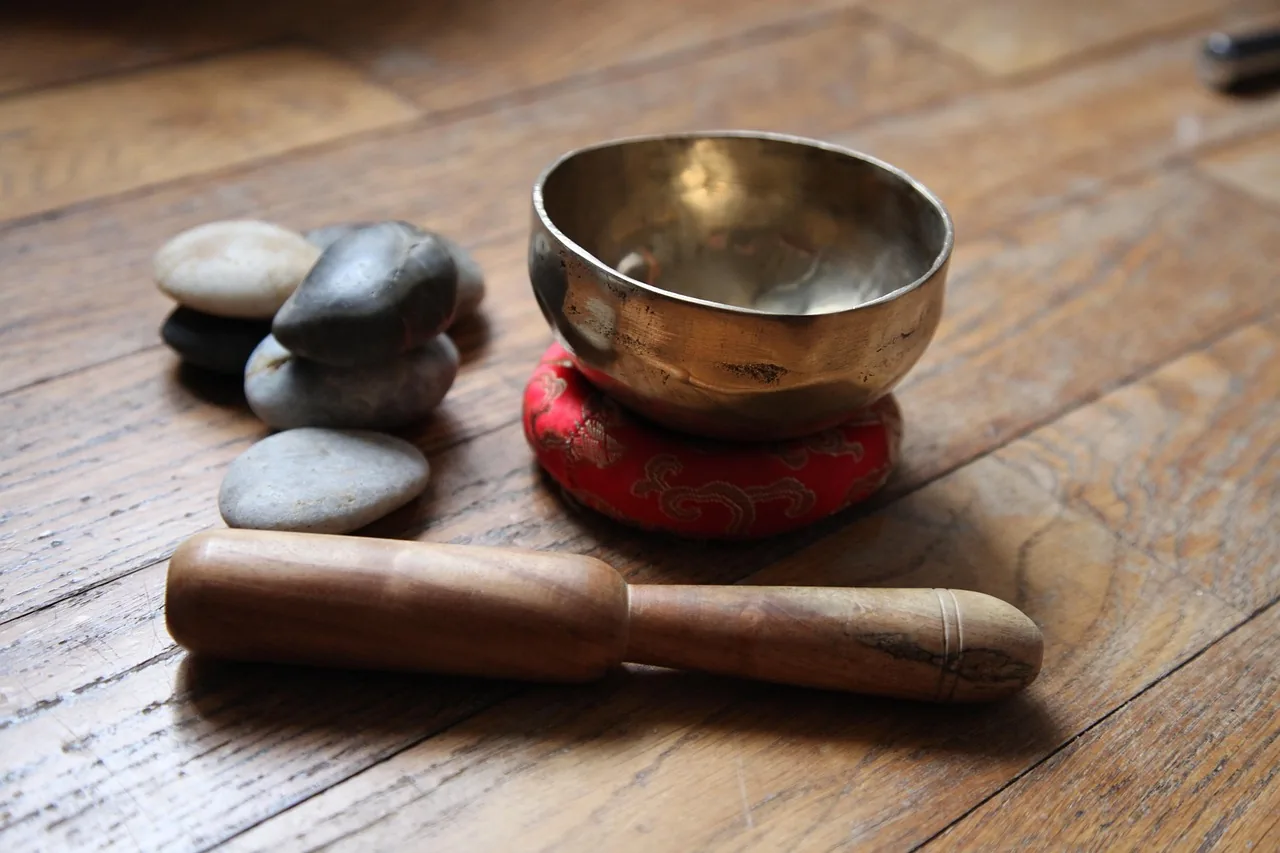
Consider the bowl’s size and accessories
Diameter helps you anticipate a bowl’s pitch range and how much room it takes up. Models range from about 10 cm to half a meter or more. A small bowl is easy to carry, while a large one is better suited to a permanent space.
Match the diameter, mallet, and cushion to how you will use the bowl
Generally, a 12 cm bowl sounds higher than a 44 cm model. Diameter, thickness, and shape affect the note, but hammering also creates differences between bowls. Compare the sound, weight, and feel in your hands before buying.
- A larger diameter tends to produce a lower sound.
- A mallet at least as long as the bowl’s diameter makes playing easier. The cushion should support the bowl without interfering with its vibrations.
- When choosing a bowl and its accessories, consider storage, whether the material is metal or crystal, and how many instruments you want.
“The right size is one you can play and store easily.”
Singing bowls and Tibetan bowls can be used alone or together. To compare sizes, see this guide to Tibetan singing bowls. You can also explore tips for choosing an instrument that suits your practice.
| Size | Sound guide | Useful accessory |
|---|---|---|
| 12 cm | Generally higher sound | Small mallet and suitable cushion |
| 44 cm | Generally lower sound | Mallet at least 44 cm long |
| 50 cm or more | Bulky model, variable pitch range | Stable support and dedicated space |
Try different vibrations to find your preferred atmosphere
A few trials are enough to discover which technique suits you. Striking produces an immediate sound, while rubbing reveals a resonance that develops gradually.
Compare striking with rubbing the rim
Strike the singing bowl once with a mallet, then listen to the lingering note. Next, move the mallet along the rim. Keep the pressure and speed steady: after a short time, the vibration may grow stronger. Your hand guides the movement, but each instrument responds differently.
To examine the spectrum, try Spectroid on Android or Tuner Pro on iOS. These apps help identify the fundamental frequency and harmonics. Their measurements are approximate: compare the results with what you hear, especially if two notes are close together.
- When assembling singing bowls in the third octave, a difference of around ±3 Hz may be acceptable.
- A margin of 1 to 2% is sometimes suitable, depending on the app and measurement time.
- You can also explore a relaxing tongue drum routine to try a different instrument.
Use measurements as guides, then choose the sound that pleases your ear. This comparison can enrich a meditation session, whether you use a Tibetan singing bowl or other Tibetan bowls.
| Trial | What it reveals | Practical guide |
|---|---|---|
| Striking | Immediate resonance | A simple technique to try |
| Rubbing | A sustained, changing sound | Steady pressure and speed |
| Mobile app | Fundamental and harmonics | Confirm by listening |
Conclusion
How you use the bowl, where you listen, and your preferences guide each listening session. A singing bowl can accompany yoga or meditation without promising a specific effect.
Its fundamental note, harmonics, timbre, and the duration of its vibrations form a unique signature. Alloy bowls often offer rich nuances, while crystal bowls may sound more focused. Comparing sounds by listening helps you identify your preferences.
Size, mallet, cushion, and playing technique also affect the result. The ISO reference has set A at 440 Hz since 1975: it is a musical reference, not a guarantee of any effect.
Links between notes and chakras belong to a spiritual tradition and carry no health promise. To explore the relationship between vibrations and how they feel, read our article on the effects of sound. Take time to listen, then keep the singing bowl you like.