

Some singing bowls cost between €60 and €100. At the other extreme, rare pieces such as the Full Moon can cost several thousand euros. That gap often raises questions when comparing models.
Several factors affect the price: size, weight, origin, manufacturing method, and alloy quality. A cast instrument requires less work than a hand-hammered piece, and that difference can affect its value. Metal and crystal also offer distinct options, sometimes at very different prices. Comparing metal and crystal helps put those differences in context.
The musical note may guide your personal preference, but it does not directly change the price of a Tibetan singing bowl. To choose a bowl that suits your budget and intended use, examine the practical factors. This guide helps you compare models and see what justifies their prices.
Tibetan Singing Bowl Prices: What Explains the Differences
To compare prices, start with the product range and the work involved. Entry-level options sometimes cost between €60 and €100. At the other extreme, a rare piece such as the Full Moon can cost several thousand euros.
From Affordable Models to Rare Pieces
Shiny, natural, and engraved finishes are often more affordable. Patan and Om Sajan are higher-end options, alongside the Full Moon. The price reflects the metals, alloy, finish, and manufacturing time, among other factors. To learn more about the materials, consult this guide to metal and crystal.
Does the Musical Note Change the Price?
The note may guide your choice according to your practice, but it does not set the price. A Tibetan singing bowl is not more expensive simply because you prefer its sound. Compare models in the same range that are made in similar ways to assess their quality. This approach keeps one detail from having too much influence on your decision.
Size, Diameter, and Weight: How Do They Affect the Price?
Size offers an initial point of reference, but it is not enough to compare two models. A wider diameter often requires more metal and comes with greater weight. This pattern is most useful when comparing pieces in the same range with similar wall thicknesses.
Why a Heavier Bowl Generally Costs More
Small bowls are often 10 to 17 cm across. Medium-sized bowls are around 20 cm, while large ones exceed 30 cm. Yet a 16 cm model may cost less than a 15 cm model if it is thinner and lighter. Diameter alone does not determine value.
Account for Wall Thickness When Comparing Two Tibetan Bowls
Wall thickness affects weight and sound. A model weighing less than 700 g tends to have a higher pitch; between 700 g and 1 kg, it may produce lower sounds. Low tones are more common from around 1 kg upward. In sound therapy, some people seek a piece weighing close to 2 kg for its strong vibrations. That choice serves a particular use; it is not a universal pricing rule.
Alloy and Sound Quality: What Sets Singing Bowls Apart
Sound also depends on the metals and their proportions. A Tibetan singing bowl is sometimes described as containing seven metals: gold, silver, mercury, copper, iron, tin, and lead. Their proportions vary from one piece to another. To understand the materials better, consult this complete guide to Tibetan singing bowls.
The Metals and Their Proportions in the Alloy
According to some descriptions, copper makes up most of the alloy. The amount of tin contributes to sustain. Commercial accounts associate pure copper from Malaysia with some Nepalese artisans and recycled copper with some Indian artisans. These claims vary by source, so check the stated composition before buying. The metal alone does not guarantee sound quality.
Sustain: A Useful Way to Listen to the Vibrations
Sustain is the time a sound remains audible after the instrument is struck or rubbed. Listen to how long the sound lasts and how it changes: it is a useful point of reference, not absolute proof of quality. A cast model may sound more consistent. The irregularities of a hand-hammered model sometimes produce a more complex sound. Try each Tibetan singing bowl and compare its resonance according to your intended use.
Manufacturing and Origin: The Value of Craftsmanship
The manufacturing method affects production time, sound, and price. When comparing pieces, consider where they come from and the work involved in making them.
Quick Casting or Patient Hammering
For a cast model, molten metal takes shape in a limestone-based mold. Hand hammering instead begins with a metal disc that is gradually shaped. Three artisans strike it while the lead hammerer turns it to form the instrument.
This method takes more time and precise work. It can give a Tibetan singing bowl a richer or more complex sound. Casting often produces a regular shape. The method alone does not guarantee sound quality: listen to the instrument before buying. To compare it with another handcrafted instrument, consult this guide to choosing a tongue drum for beginners.
Origin and Artisan Pay
Workshops make these instruments in Nepal, India, China, and Bhutan. Practices vary, as do the choice of metals and the alloy composition. After the COVID-19 crisis, raw materials and transport by sea or air became more expensive. Hammerers’ wages also rose. These factors can contribute to price differences. A guide to metal and crystal can help you compare the materials.
Ranges and Finishes: Why Some Tibetan Bowls Cost More
The surface, workshop labor, and rarity all affect a piece’s value. These details help distinguish a simple finish from a more involved manufacturing process.
Shiny, Natural, and Engraved: Entry-Level Finishes
The Shiny bowl retains its untreated appearance, without a special finish. The natural version receives a patina after an acid bath. For acid etching, the artisan applies black wax by hand, then immerses the piece in several baths. The acid marks the unprotected areas. This work takes more time and creates distinctive patterns.
Patan, Om Sajan, and Full Moon: Higher-End Ranges
Patan is associated with an alloy designed by German sound therapist Peter Hess and with careful polishing. Om Sajan costs about half as much as Full Moon. In this comparison, its quality approaches 80% of that of the rare model. The latter is hammered on full-moon nights and can cost several thousand euros. You can also explore the differences between metal and crystal.
Antique Bowls: The Effect of Age
Age can affect the price of an antique piece. To compare instruments, also consult these tips for buying wisely.
| Range | Finish or distinguishing feature | Value indicator |
|---|---|---|
| Shiny | Appearance without a specific finish | Simple option |
| Natural or engraved | Acid patina or engraved patterns | Additional work |
| Patan or Om Sajan | Careful polishing or an alloy associated with Peter Hess | Higher-end range |
| Full Moon or antique | Rare hammering process or age | Potentially high value |
Choosing a Singing Bowl for Your Budget and Intended Use
The right choice depends mainly on your practice and the sound you want. For relaxation or meditation, listen to the resonance before deciding. A Tibetan singing bowl can also be used in sound therapy, but a sound you find comfortable to listen to remains essential.
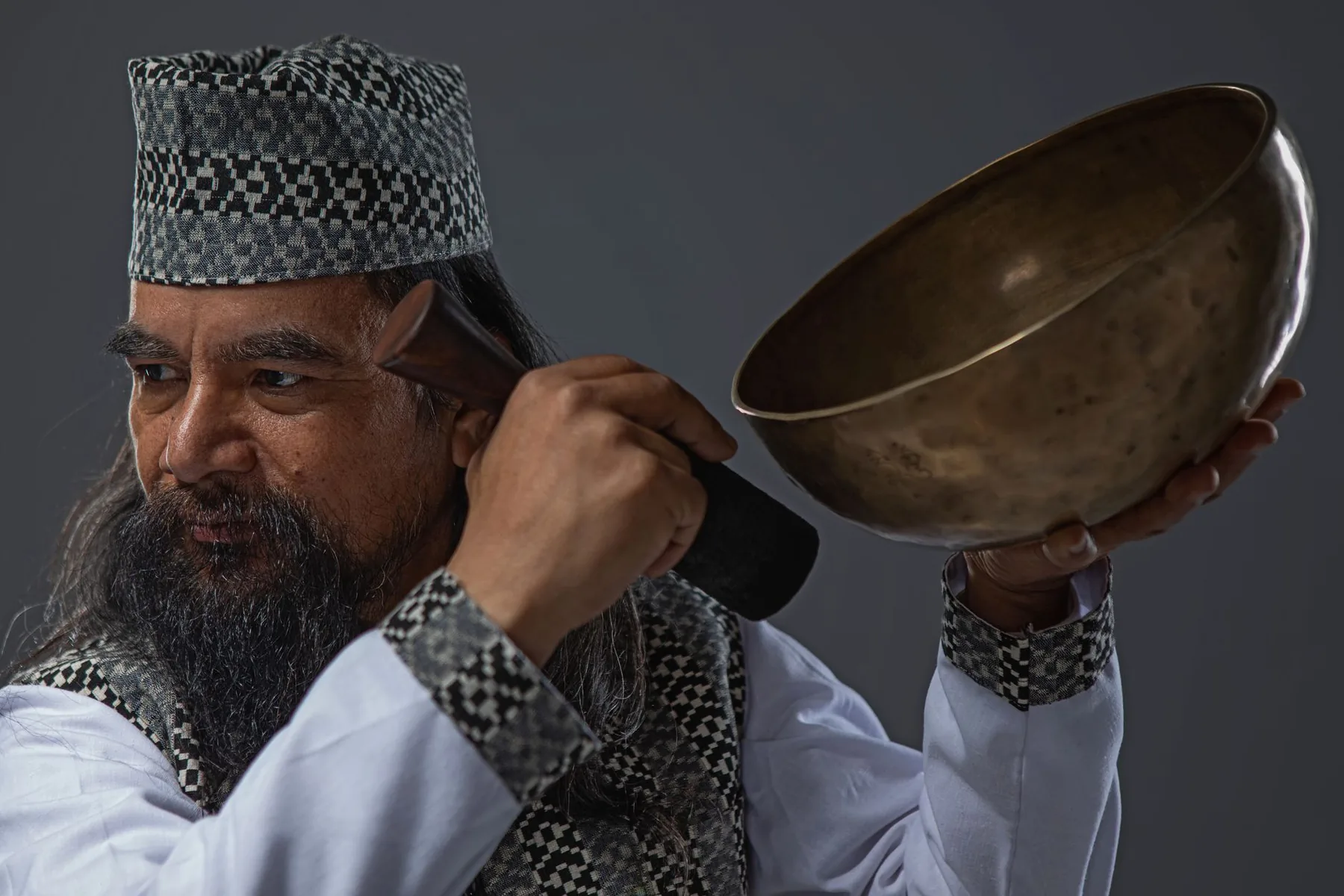
Compare Sound, Weight, and Vibrations for Your Practice
Small bowls are often 10 to 17 cm across. Medium-sized models start at around 20 cm, while large ones exceed 30 cm. Below 700 g, the instrument tends to have a higher pitch. From 1 kg upward, it more often produces lower sounds. For meditation, a weight of 700 to 800 g sometimes offers an interesting range of harmonics. Still, listen to the vibrations: they matter as much as size. Links between notes and chakras are beliefs, not established facts.
Check the Accessories and Choose a Suitable Mallet
Check whether a mallet and cushion are included. The lightweight, compact Silent Mind model weighs 470 g and includes these accessories. Ohm Store also supplies a cushion and striker with its 10.2 cm model. Finally, consider how the mallet feels in your hand: some measure 12 cm by 2 cm and are made of cherry wood. Choosing a bowl after listening to it and considering your needs helps you find a pleasing sound without paying for a feature you will not use.
Conclusion
Ultimately, the price depends on weight, diameter, alloy, origin, and manufacturing method. Two pieces measuring 15 and 16 cm can therefore have different prices. Affordable models sometimes cost between €60 and €100, while a Full Moon can cost several thousand euros. The finish matters too, as does the work of the three artisans and the lead hammerer.
Before buying, check the diameter, weight, and accessories. Small bowls are often 10 to 17 cm across; a medium-sized bowl is around 20 cm. To refine your choice, consult our guide to the ideal size. The Tibetan singing bowl should suit your budget and your practice. Listen to its sound: a bowl that meets your needs can support your well-being while offering good quality.