
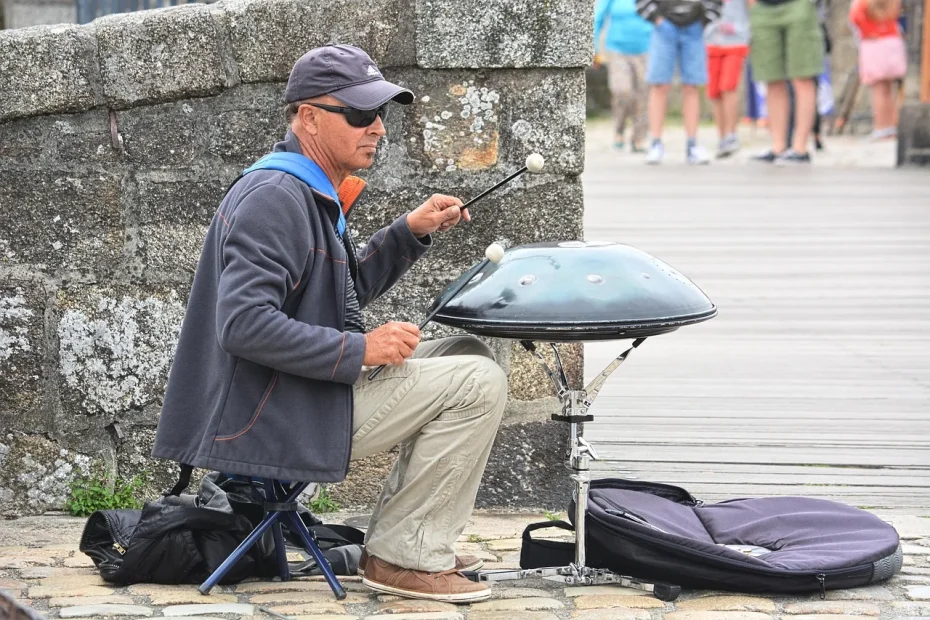
What this article offers: This article helps you choose the instrument best suited to relaxation and well-being through sound.
These two contemporary melodic percussion instruments are used for meditation, music therapy and improvisation. They have very different tones and a range of uses.
When seeking soothing sounds, consider sustain, bodily resonance and a volume suited to the listening setting. The origins and construction of these instruments help explain their sound qualities.
Differences: the handpan has a clear sound rich in overtones and a higher volume, making it suitable for the stage as well. The tongue drum produces a soft, deep tone with long sustain, valued in sound therapy.
We will compare scales, playing techniques, portability and cost. Try the instruments in a shop to feel their vibration and assess how comfortable they are to play. The aim is to give you practical guidance for an informed, lasting choice.
Essentials and background: two steel instruments for relaxation
These two instruments share a round shape, but their histories are very different. These creations have become established in modern sound practices and well-being workshops.
Origins and history
The handpan emerged around 1999–2000 at PANArt in Switzerland through the work of Felix Rohner and Sabina Schärer. Drawing on the Caribbean steel drum and Indian ghatam, they joined two shells with tuned dimples.
In the United States, Dennis Havlena invented the tongue drum by repurposing gas cylinders. His handmade approach, influenced by African slit drums, evolved into professional, adaptable models.
Purpose and use today
Since the 2010s and 2020s, these instruments have gained a place in meditation sessions, sound healing and improvisation. They are made in two different ways: the handpan through a complex craft process, and the tongue drum through a more flexible, partly industrial process.
“Sound supports breathing and invites inward listening.”
- Watch the names: Hang, handpan and pantam on one side, and steel tongue drum on the other.
- Catalogues offer scales, finishes and models designed for relaxation or performance.
To learn more about particular tuning choices, read this practical article on 432 Hz tuning. Ultimately, the setting, purpose and heritage strongly influence how an instrument feels to play and how soothing its sound seems.
Sound, sustain and resonance: what the ear hears during relaxation
When you listen, each instrument quickly reveals its own acoustic character. Its sound affects attention and can help you relax.
Clarity and harmonic richness
Handpan: its tone is clear, almost bell-like. It has plentiful overtones and medium to long sustain. It is often loud enough for stage performance without amplification.
Enveloping low notes and long sustain
Tongue drum: it offers deep fundamental tones and a soft halo of sound. Its very long sustain fills a space and creates an atmosphere suited to sound healing. Some models can be amplified discreetly.
Bodily resonance and listening settings
Low notes and a long decay can foster a sense of grounding. Resonance may be felt physically, support breathing and slow the heart rate.
- Dynamics: the handpan ranges from ppp to ff; the tongue drum favours gentle strikes.
- Volume: the first projects sound farther, while the other lends itself to intimate listening.
- Rhythm: slow cycles and pauses support mindfulness.
For an intimate sound bath, the tongue drum excels. For a relaxing concert where the sound needs to carry, choose the handpan. Read this tongue drum comparison if you would like to explore the differences between models.
Scales, notes and musical expression
Melodic possibilities depend first on the number of notes and the instrument’s range.
Handpan: it generally has 7 to 10 main notes, with expanded tone fields reaching around 21 to 22 notes through additional areas on the dome. This makes it possible to create lines from low to high notes and percussive effects. Overtones enrich open chords and create a sense of space.
Tongue drum: it often has 6 to 9 notes, sometimes as many as 14, depending on the model. Pentatonic tunings reduce the chance of playing a “wrong note,” making improvisation easier even for beginners.
Practical applications
- Melodic freedom: more notes provide more harmonic possibilities but require greater skill.
- Style: diatonic scales support more elaborate compositions; pentatonic scales suit mantras and meditative sequences.
- Grounding: low notes are essential to the physical sensation and to deep breathing.
- Nuance: the attack, where you strike and whether you use your fingers or palm change the tone.
Tip: beginners often start with a pentatonic scale before moving on to richer scales.
To compare models and scales, read this practical comparison.
Design, steel and manufacturing
The design and choice of metal largely determine an instrument’s tone, sustain and sound projection.
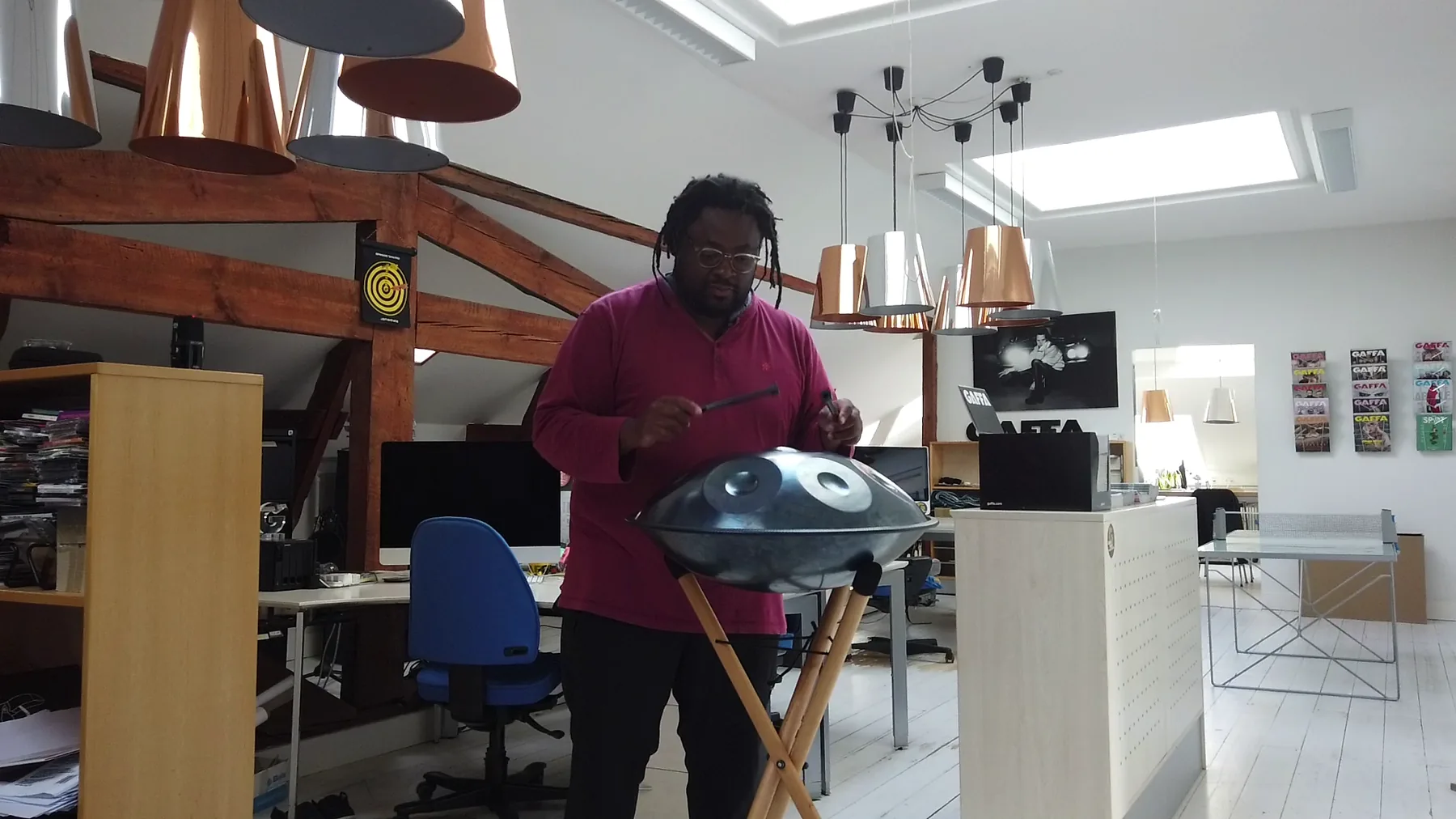
Materials and construction
Handpan: two welded shells of nitrided or stainless steel, with dimples formed without cutting holes. The metal is about 1 to 2 mm thick.
The tongue drum is built from a solid body of thicker steel, about 3 to 6 mm, with tongues that are cut and ground.
Manufacturing process
Handpan making combines hand hammering with successive rounds of tuning. Assembly often takes 2 to 3 months and requires precise control of the overtones.
The partly industrial method uses laser cutting, grinding and quick adjustments. A magnet can adjust the tongues if needed.
Effects on sound and quality
Thin metal encourages complex resonance and rich overtones, but remains sensitive to impacts and to temperatures above 40 °C.
Thick steel produces stable fundamental tones and long sustain while providing durability suited to travel.
- Quality: check every note and test the sustain.
- Tip: favour established makers to reduce the risk of tuning defects.
Design directly affects how an instrument is used, whether for intimate therapeutic sessions or stage performance.
Playing techniques and ease of use
Your movements and choice of striking tool shape the sound from the first few minutes of playing.
Hands or mallets: precision, dynamics and playing style
The handpan is played mainly with the fingers and palms. This contact allows fine nuances, controlled strikes and gentle staccato notes.
The tongue drum can be played with mallets or hands. Mallets allow precise strikes and produce a clear fundamental tone. Beginners often find this method more accessible.
Learning curve: getting started and gaining expression
The second instrument is quick to learn: a few weeks can be enough to master relaxing patterns.
Finger playing takes more time. Several months of practice help you control dynamics and overtones with confidence.
Typical uses and practical exercises
Simple exercises: synchronised breathing, slow ostinatos and changes in intensity. These techniques can help you relax immediately.
- Hand placement: use a light touch and strike the centre or edge according to the attack you want.
- Rhythmic consistency: allow for the length of each note’s resonance and avoid letting overtones mask one another.
- Ergonomics: adjust the height, support and seated position for long sessions.
For therapeutic musicians: repetitive routines benefit from the tongue drum’s stability, while more nuanced sound journeys benefit from finger playing.
Choose the playing style that suits your sensitivity and well-being goals. Guided improvisation remains a powerful tool with either instrument.
Shape, size, weight and portability
Size and weight determine whether an instrument stays in the studio or travels with you. Consider transport, maintenance and how often you will use it.
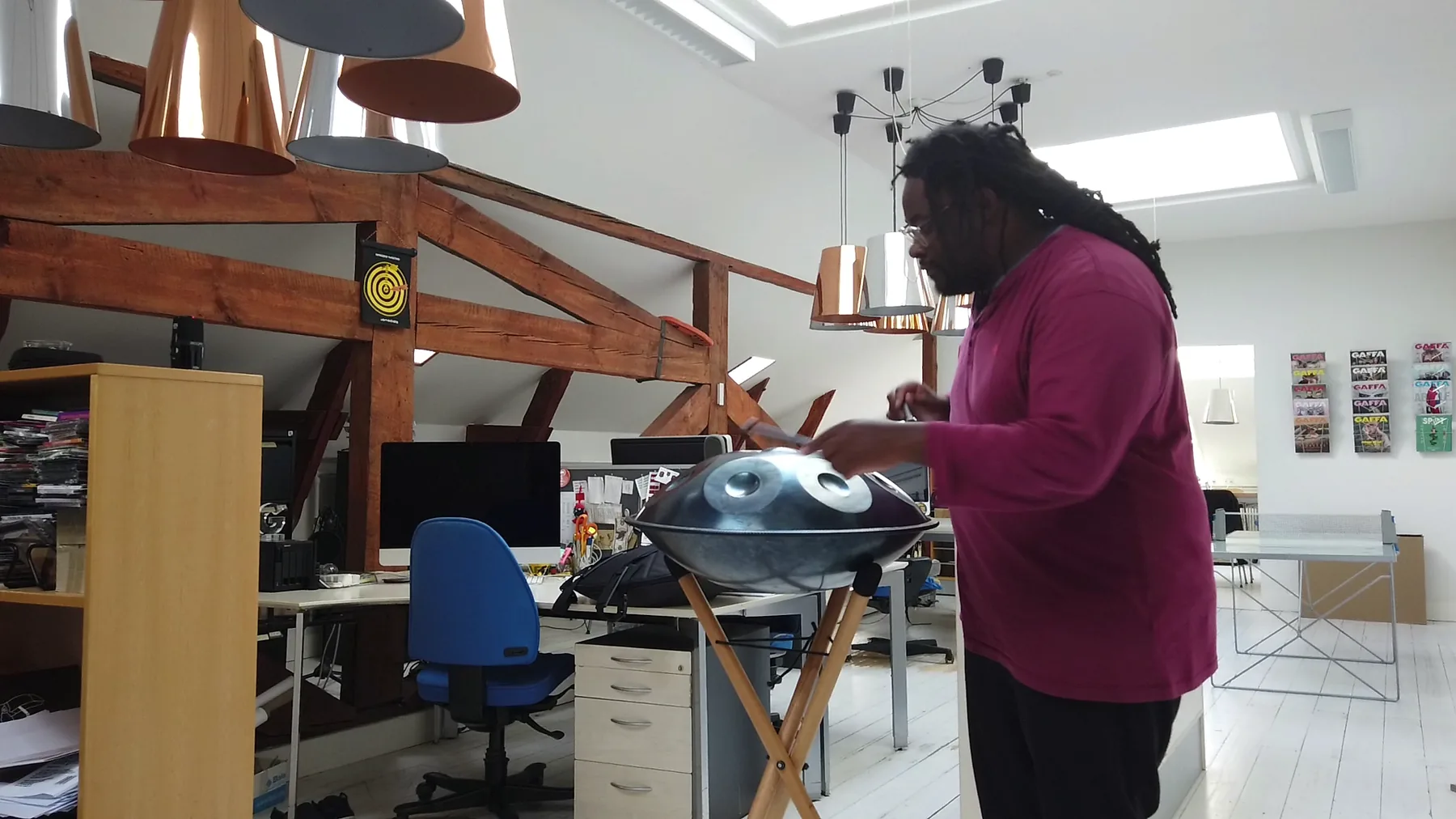
Dimensions and ergonomics
The hemispherical shape of larger models encourages resonance and sound projection. A standard handpan measures about 50 cm in diameter and weighs 4 to 5 kg.
Compact instruments fit more easily in a bag; a tongue drum may measure as little as 15 cm and often weighs 1 to 3 kg, making it well suited to outdoor sessions.
- Transport: a rigid, temperature-controlled case is recommended for fragile models.
- Accessories: a padded bag is enough for sturdier formats.
- Ergonomics: adjustable stands and a suitable playing angle help prevent back fatigue.
| Feature | Large format | Compact format |
|---|---|---|
| Size | 18 to 23 inches, about 50 cm | 15 to 40 cm |
| Weight | 4 to 5 kg | 1 to 3 kg |
| Protection | Reinforced case | Padded bag |
| Durability | Thin, delicate metal | Thick, resilient steel |
Your choice depends on whether you are a travelling practitioner, a stage musician or someone who likes to play on the move.
Tip: test your posture, especially seat height and the distance between your arms and the instrument, and favour portability if it will help you practise regularly.
For buying and transport advice, read this tongue drum guide.
Budget, prices and maintenance in France
Investing in an instrument means assessing both its purchase price and its running costs.
Price ranges and lead times
In France, the differences are clear. Tongue drum models listed at La Baguetterie cost from €22.90 to €499. A handpan is more likely to cost between €999.90 and €2,999.

Lead times vary: allow 6 to 18 months to order a high-end handpan and 1 to 4 weeks for a tongue drum.
Maintenance and running costs
A handpan needs regular care: oiling, waxing and professional retuning when necessary. These tasks bring recurring costs.
A tongue drum is robust. Cleaning it to prevent rust and occasionally adjusting it with a magnet are often enough.
- Accessories: allow €50 to €200 for a protective case and €20 to €80 for mallets and a bag.
- Second-hand instruments: test the tuning, check for oxidation and ask about maintenance history before buying.
- Alternatives: consider renting, introductory workshops or instalment payments to limit the risk.
Tip: match your investment to how you will actually use the instrument — for personal practice, therapeutic work or stage performance — to protect the value and quality of your purchase.
Tongue drum or handpan: which is better for relaxation?
Sound needs differ considerably between beginners, practitioners and professional musicians. Here are practical situations to help you choose for regular meditation or group playing.
People and situations
Beginner playing at home: choose a pentatonic tongue drum. It is easy to start playing and suits daily sessions.
Therapist or well-being practitioner: this sturdy instrument is easy to carry and suits repetitive routines. Its deep fundamental tones and long sustain are valued in sessions.
Musicians and composers: the handpan offers a wider harmonic palette, with 7 to 10 notes and up to around 21 tone fields. It suits stage arrangements and subtle expression.
Quick recommendations
- Long sustain and softness: choose the tongue drum, which excels at creating a grounding sound.
- Clarity and harmonic richness: choose the handpan if you perform in public or compose complex textures.
- Portability: if the instrument will travel often, choose a compact, lightweight format.
Deciding factors
Base your choice on the number of notes you want, the quality of the resonance, your total budget including purchase and care, and the size of the spaces where you will play or listen.
Try playing before you buy: how the instrument feels to the touch often reveals your preference. To get started, read these steel tongue drum basics and compare the models available in France.
Conclusion: the ideal instrument depends on the player and its intended use. Both can complement each other in a practice focused on well-being.
Conclusion
The decision rests on three simple factors: sound, portability and budget.
The handpan offers a clear sound rich in overtones, good projection and many notes. Despite its high price, it suits musicians seeking expression and stage performance.
The tongue drum favours deep fundamental tones, long sustain and durability thanks to its thicker steel. It remains affordable, portable and easy to maintain.
Practical tip: try both instruments. Feel how they respond to your touch, compare their size and weight, and picture your meditation and music sessions.
In short: there is no universal choice. Choose according to how you will use it, and consider the other instrument later if needed.