
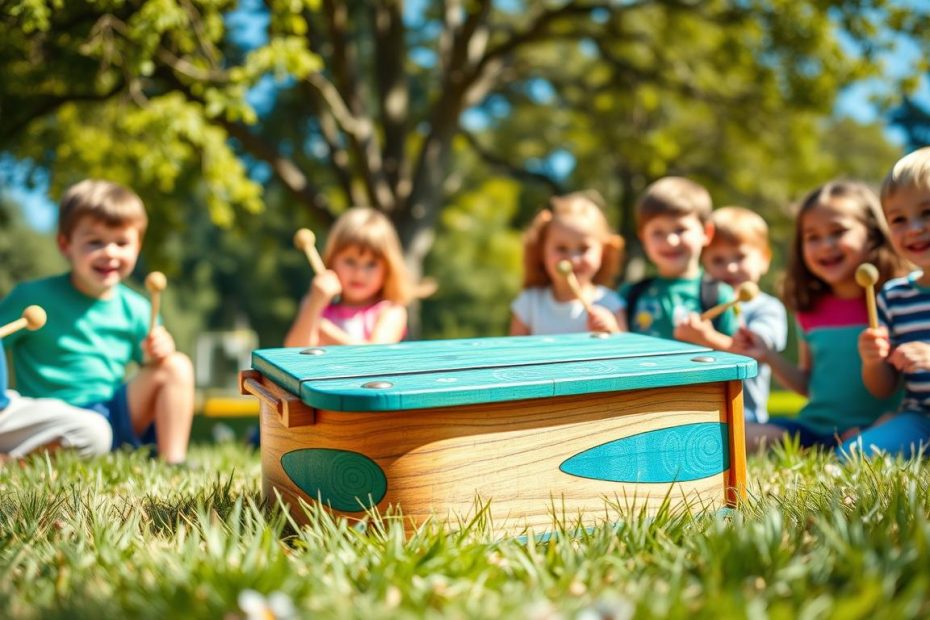
A buying and beginner’s guide to discovering a steel instrument with precisely tuned notes, created in 2007 by Dennis Havlena. This guide is for parents, educators and activity centres that want to offer a playful, structured introduction.
Why do families find this instrument so appealing? It is quick to learn, its sounds are soothing, and children can progress naturally without reading music. Since 2020, its growth in French schools and workshops has been notable, supported by music therapy and dedicated practitioners.
We cover how to choose one, materials, tuning frequencies (440 Hz and 432 Hz), prices, accessories and ideas for educational games. You will also discover established brands (Zenko, Sela, Meinl) that offer quality and reliable tuning.
To see a selection of suitable models, visit the specialist shop: Instruments du Monde – collection. This guide offers a playful 30-day programme, safety checklists and practical figures to help you buy with confidence.
Introduction and current benefits of tongue drums for children
This instrument offers a playful introduction to music for young children. From age 3, they can create harmonious melodies without technical effort.
Regular practice improves procedural memory by nearly 30%, according to a study by Lumière Lyon 2 University. Musical routines also increase concentration in the classroom and at home.
The psychomotor benefits are tangible: better bilateral coordination from using two mallets, along with stronger fine motor skills and rhythmic awareness. Short practice sessions can produce visible results in 2 to 4 weeks.
Since 2020, the instrument’s popularity has risen by 45% in nursery and primary schools. Montessori workshops and music therapy sessions recommend it for relaxation and creativity.
- Greater self-esteem: children reproduce familiar nursery rhymes.
- Gentle sound: frequent sessions without listening fatigue.
Coming up in this guide: buying criteria, safety and daily activity ideas to extend this learning.
Why give a child a tongue drum?
Giving a child this instrument opens up a world of sound suited to exploration and learning.
Proven cognitive and emotional benefits
Cognitive benefits: regular practice stimulates memory, attention and awareness of where notes are placed. It improves hand-eye synchronisation and fine motor coordination.
Emotional benefits: playing encourages non-verbal expression. Harmonious vibrations reduce stress and help children regain calm. A field study indicates that 78% of young players gain confidence after 3 months of sustained practice.
A sturdy, safe instrument that meets standards
CE safety: rounded edges, non-toxic paint and a weight below 2 kg. Good models have a one-piece design and no small parts that could be swallowed.
- Durability: stable tuning observed over 5 years of family use.
- Comfort: before buying, check that the instrument is easy to handle and stable when placed on a table.
This gift encourages positive musical habits over the long term. With a quality instrument and the right choice of model, learning can continue throughout a child’s early years.
Understanding the instrument: how it works, its sounds and origins
Its design is based on a steel shell with small strips cut into its surface: the tongues. Each one vibrates at a specific frequency when struck. The principle is simple and reliable.
From steel to vibrating tongues: easy to start playing
Strike it gently with rubber mallets to produce clear sounds with long resonance. Playing requires little technique; intuition is often enough to create harmonious patterns.
Created in 2007 by Dennis Havlena, this modern instrument draws on the idea of older slit drums. It has many names: tank drum, hank drum, steel tongue drum, zen drum and tongue drum.
- Sounds: a soft, enveloping tone, ideal for introducing children to music and for wellbeing workshops.
- Listening cues: larger diameters produce deep low notes; smaller instruments have more prominent high notes.
- Comparison: similar to the handpan in its intuitive approach, but less expensive and easier to maintain.
Brands such as Zenko, Beat Root, Sela and Meinl Sonic Energy have refined the tuning and expanded the available ranges. After several years in circulation, the instrument has become popular in schools and workshops.
The next section explains the technical criteria to consider before buying.
Essential criteria for a buying guide
Choosing a good model means assessing the number of notes, tuning and ease of handling. These factors determine how easy the instrument is for younger players and how long it will last.
Number of notes and stable tuning
At least 11 notes: this covers most nursery rhymes and allows children to play varied melodies without too much complexity. Resonance lasting at least 8 seconds provides a pleasing sound.
Tip: check the tuning with a smartphone app as soon as the instrument arrives.
Key: C major, diatonic or pentatonic scale
The key of C major makes learning easier and aligns with school methods. A diatonic scale is versatile enough for a wide repertoire.
A pentatonic scale avoids “wrong” notes and suits relaxation sessions, but limits the repertoire.
Size, diameter, weight and ergonomics
A practical rule: allow roughly 1 cm of diameter per year of age to make the instrument easier for a child’s hands to manage.
- Steel thickness: around 1.5 mm for good resonance.
- Weight < 2 kg to encourage independent playing.
- Look for coloured note markers, non-slip feet and a surface that does not slide.
Avoid cheap models with multiple tunings: their tuning often shifts and hinders learning. To make your final choice, read the sections on materials and age groups.
Materials and build quality to look for
The material determines durability, maintenance needs and how the notes sound during family use.
Stainless steel offers a clear tone and excellent durability. Nitrided steel better resists moisture and scratches. Steel-titanium alloys, used in some popular models, produce a crisp, refined sound.
Choosing by tone and signs of quality
Check for neat welds, even finishes and non-toxic paint. These are signs of good build quality and a life of several years.
Tuning frequencies and consistent teaching
440 Hz remains the reference tuning for playing with other instruments. Some people find 432 Hz softer and prefer it for relaxation sessions.
- Choose stable tuning over systems with multiple tunings.
- Balance materials and price: stainless steel for entry-level instruments, titanium alloys for premium ones.
- Good packaging and a case protect the instrument from the day you buy it.
Finally, clear note markings and stable tuning support progress. A good choice of material improves the sounds and helps preserve the tuning.
The best types of model for each age group
Choosing a model suited to the child’s age makes learning easier and supports safety during their first musical explorations.
Under 4: lightness and safety
For very young children, choose a very light model (around 800 g) measuring 15 to 20 cm across. Look for 6 to 8 notes, bright colours and certified rounded edges.
Tip: a pentatonic scale avoids wrong notes and encourages free play.
Ages 4 to 6: a model for learning
For children aged 4 to 6, choose an 11-note model in C major with a diameter of 20 to 25 cm. This size suits small hands and supports a wide range of nursery rhymes.
Check that it is stable on a table and that the note markers are easy to read. A non-slip coating and an engraved name are useful extras.
Over 6: room to progress and greater resonance
For ages 6 to 12, consider 13 to 15 notes for better resonance and longer-lasting sound. Learning kits (illustrated sheet music and videos) help children play independently.
Check the clarity of low notes on larger models, and allow for a lightweight case and non-slip pads.
Tongue drum or handpan: which instrument for a child in 2025?
Comparing these instruments helps families and schools choose according to budget, safety and intended use. In practice, tongue drums are often preferred for children under 8.
Price, weight and learning time
Average price: around €300 for a tongue drum, compared with around €1,200 for a handpan. This difference makes the tongue drum more accessible to family budgets.
Weight: around 1.8 kg versus around 5 kg. The lighter instrument is easier for a child to handle and transport to class.
Learning time: simple melodies can be played on a tongue drum in 10 minutes; a handpan takes several weeks of practice to produce steady patterns.
Safety, maintenance and tuning stability
Safety: choose rounded edges and non-toxic paint. Some handpans have edges that are less safe for younger children.
Maintenance: a tongue drum holds its tuning without frequent adjustment. A handpan often needs annual retuning (around €150).
Classroom use: the lightweight, stable model readily finds a place in class. Its moderate volume and immediate sound encourage group playing.
- More models are available for families than for other instruments.
- A better balance of safety, price and progress for ages 3 to 7.
Conclusion: in 2025, the tongue drum remains a strong choice for young children on grounds of budget, safety and quick progress. Consider a handpan later, when motor skills and musical hearing are better developed.
Prices and budgets: from discovery models to premium instruments
Budget often affects both the pleasure of playing and the lifespan of an instrument for young people.
A quick overview of price ranges:
- Discovery: from around €20 — small diameter, 6 notes and short resonance. Ideal for testing a child’s interest.
- Mid-range: €60 to €200 — a good balance for families, with practical, robust models.
- Upper mid-range and premium: up to €1,000 — stainless or nitrided steel, precise tuning and long resonance.
At entry level, expect fewer notes and a smaller diameter. Resonance is often limited and tuning may vary.
For more ambitious learning, models such as the 13-note Melody Kid, at around €89, offer a noticeable improvement in ease of play.
Moving up a range: better materials, more precise tuning, longer resonance and greater durability. Stainless and nitrided steel versions better resist moisture and knocks.
Include a case, mallets and warranty in the total budget. Be wary of unusually cheap offers: unstable tuning can quickly spoil the experience.
Final tip: match your choice to the child’s age, goals and frequency of use. A good balance of price and quality also helps recognised brands retain a higher resale value.
Essential accessories for getting started
The right accessories make the first playing sessions more enjoyable, lasting and safe. They improve control, protect the surface and make transport to school or workshops easier.
Mallets and tips
Suitable mallets, tips and coloured markers
Choose short mallets (around 15 cm) for small hands. They give better control and reduce fatigue.
Choose cork tips for a gentle sound or felt tips for a warmer one. These options change the tone without affecting the tuning.
Tip: coloured adhesive markers help children memorise the notes quickly.
Protection and transport
Cases, non-slip supports and protective accessories
Choose an IP54 case with at least 2 cm of padding, and check its weight.
- Anti-vibration pads keep the instrument stable and protect furniture.
- Internal pockets hold mallets and accessories.
- Consider corner protectors according to the surface supporting the instrument.
Clean the instrument with a slightly damp microfibre cloth to preserve the quality and appearance of the steel.
Many shops offer bundles containing a case and supports. To see complete kits and cases and find more advice, browse the online offers.
Tongue drum for kids: simple musical games to invent
A well-structured 30-day programme helps children progress quickly. It combines free exploration, rhythm and creativity. Short sessions keep children motivated and give their learning continuity.
A playful 30-day programme inspired by Montessori
Ten to 15 minutes a day is enough. Week 1: discover the sounds with the fingers and match colours to notes. Week 2: alternate hands in rhythmic patterns to improve coordination.
Week 3: reproduce nursery rhymes in C major using visual markers. Week 4: begin guided improvisation with 3 to 5 notes, then gradually add more.
French nursery rhymes in C major for memorising notes
Frère Jacques remains the starting point for 85% of children. Other easy tunes include Au clair de la lune, Une souris verte, Petit escargot and Alouette.
Visual sheet music and stickers speed up learning by around 40% and strengthen memory of the notes.
Rhythm and improvisation games for coordination
- Rhythmic call and response between parent and child.
- A stop-the-note game and crescendos and decrescendos.
- A creative challenge: a pattern of the day and a story told through sounds.
Film a short session each week to track progress, encourage the child and establish a positive music routine.
Where to buy in France: online and in a specialist shop
Where you buy affects the quality of advice, the chance to try instruments and after-sales service. In a specialist shop (for example, Instruments du Monde in Paris), you can test several models and get advice suited to the child’s age and ability.
Online sales account for 62% of purchases. Specialist sites often offer bundles (case and mallets) and responsive after-sales service. Large general retailers have a more limited selection; only 23% offer professional tuning.
Specialist shops or general retailers
- Specialist shops: in-store trials, price-based ranges, personal advice, bundles and after-sales service.
- General retailers: sometimes lower prices, fewer tuning options and limited opportunities to try instruments.
Pre-purchase checklist: resonance, welds and certificates
Quick checks to carry out on delivery or in the shop:
| Criterion | Expected result | Why it matters |
|---|---|---|
| Resonance | At least 8 seconds | Provides enough resonance for learning |
| Welds and finishes | Even and neat | Reduces the risk of wear and indicates quality |
| Certificates | CE conformity and non-toxic materials | Essential for young players |
| Tuning | Stable on arrival | Check with an app when comparing 2 to 3 models in C major |
Practical advice: favour established brands (Zenko, Meinl, Sela, Beat Root) for reliable tuning. Check tuning with an app on arrival and insist on protective packaging for delivery.
For an expert selection and suitable services, visit a specialist shop or explore online offers through guides and product pages, such as the page on tongue drums for music therapy.
Useful alternatives by age and goal
Complementary instruments let you tailor musical discovery to a learning goal. The choice depends on whether you want to develop melody or rhythm.
Kalimba: bright melodies and finger dexterity
The kalimba (around €25 and 200 g) is an affordable, portable melodic alternative.
It develops finger precision and helps children learn short pieces of music. Its light weight makes it easy to carry to lessons or workshops.
Traditional percussion: rhythm, tempo and musical discovery
Percussion instruments (tambourines and maracas) remain a good first introduction to tempo and rhythmic coordination.
Note: the observed dropout rate is 37% higher than for tongue drums because of the noise and lack of tuning.
- Ideal for working on tempo and group interaction.
- A rainstick is recommended for very young children as a gentle sensory experience.
- Mixed sets (kalimba and small percussion instrument) offer varied playing throughout the year.
Practical tip: choose according to your goal: melodic creativity with a kalimba or rhythmic practice with percussion.
For a gift, consider the child’s age, sound sensitivity and desire to play. Try models in a shop to check their ergonomics and sound before buying.
Maintaining and protecting your instrument over time
A few simple care habits preserve tuning and tone for several years. Regular maintenance protects the metal’s quality and makes daily playing easier.
Gentle cleaning, storage and suitable cases
Wipe away dust with a slightly damp microfibre cloth. Apply a thin layer of almond oil to the metal parts to protect the alloy.
Store the instrument in a padded case, away from direct sunlight. Choose a place without large temperature changes.
Moisture, knocks and regular tuning checks
Keep humidity between 40% and 60%. This range protects the steel and preserves the tuning.
- Monthly inspection: dust and wipe the instrument.
- Watch for problems with welds, small dents and condensation.
- Use non-slip pads to limit unwanted vibrations.
- Test key notes with a tuner every 2 to 3 months.
- For premium models, consider insurance when travelling.
| Action | Frequency | Tools |
|---|---|---|
| Dusting | Every month | Microfibre cloth |
| Oil protection | Every 3 months | Almond oil and a soft cloth |
| Tuning check | Every 2 to 3 months | Digital tuner |
| Treatment for oxidation | When needed | Diluted white vinegar, followed by rinsing and immediate drying |
Practical tips: avoid sudden temperature changes and act quickly if light oxidation appears. Simple maintenance extends the instrument’s musical life by several years.
Conclusion
In conclusion, today’s range makes it possible to find models suited to a child’s age and budget, with good sound quality and a clear educational choice.
A lightweight tongue drum for a child (no more than 2 kg), with around 11 notes in C major and stable resonance, remains ideal for beginners.
Prioritise CE conformity, durable materials and reliable tuning. Regular practice improves coordination, confidence and concentration.
Accessories encourage independence; try the 30-day programme of nursery rhymes and improvisation. For good advice, buy from specialists and compare other instruments (kalimba and percussion).
Check the tuning frequency (440 or 432 Hz) according to your preferences. If the child’s interest grows, upgrading may make sense. Above all, share the pleasure of music as a family.